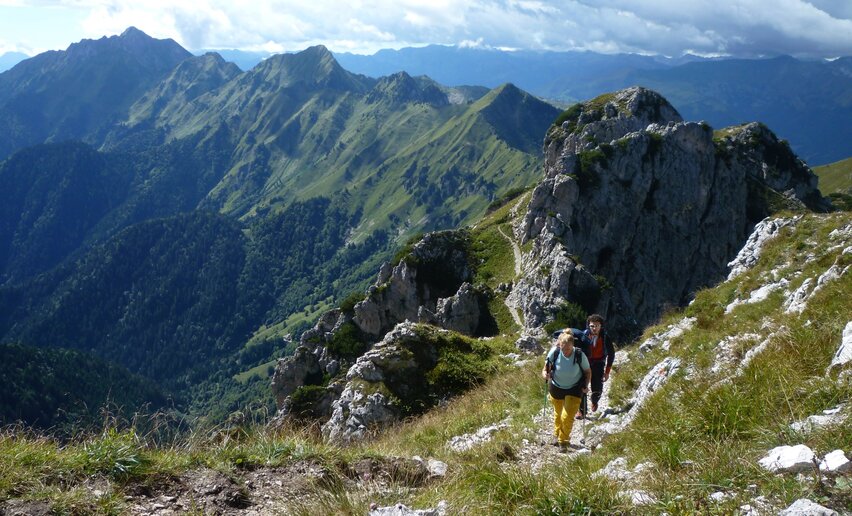
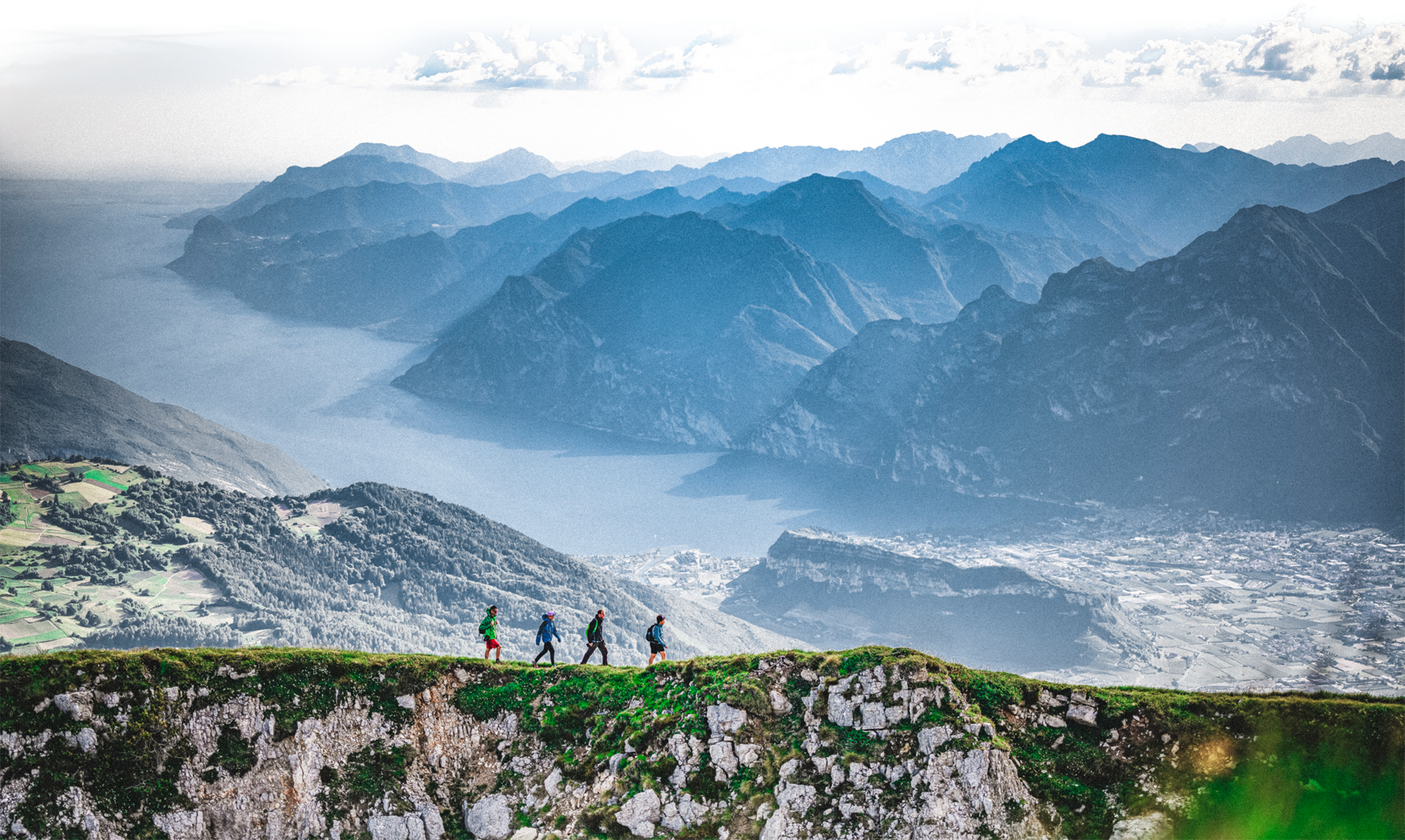
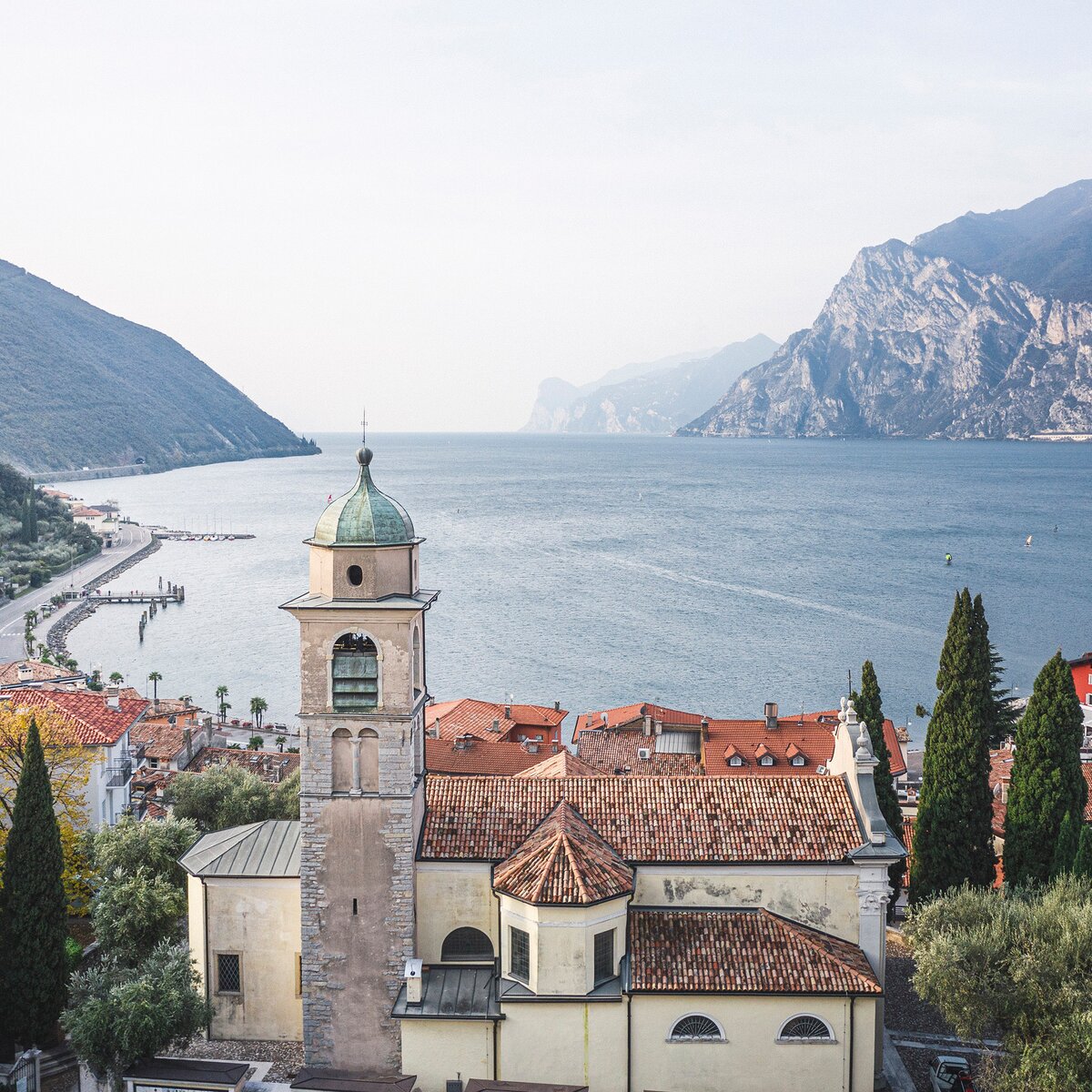
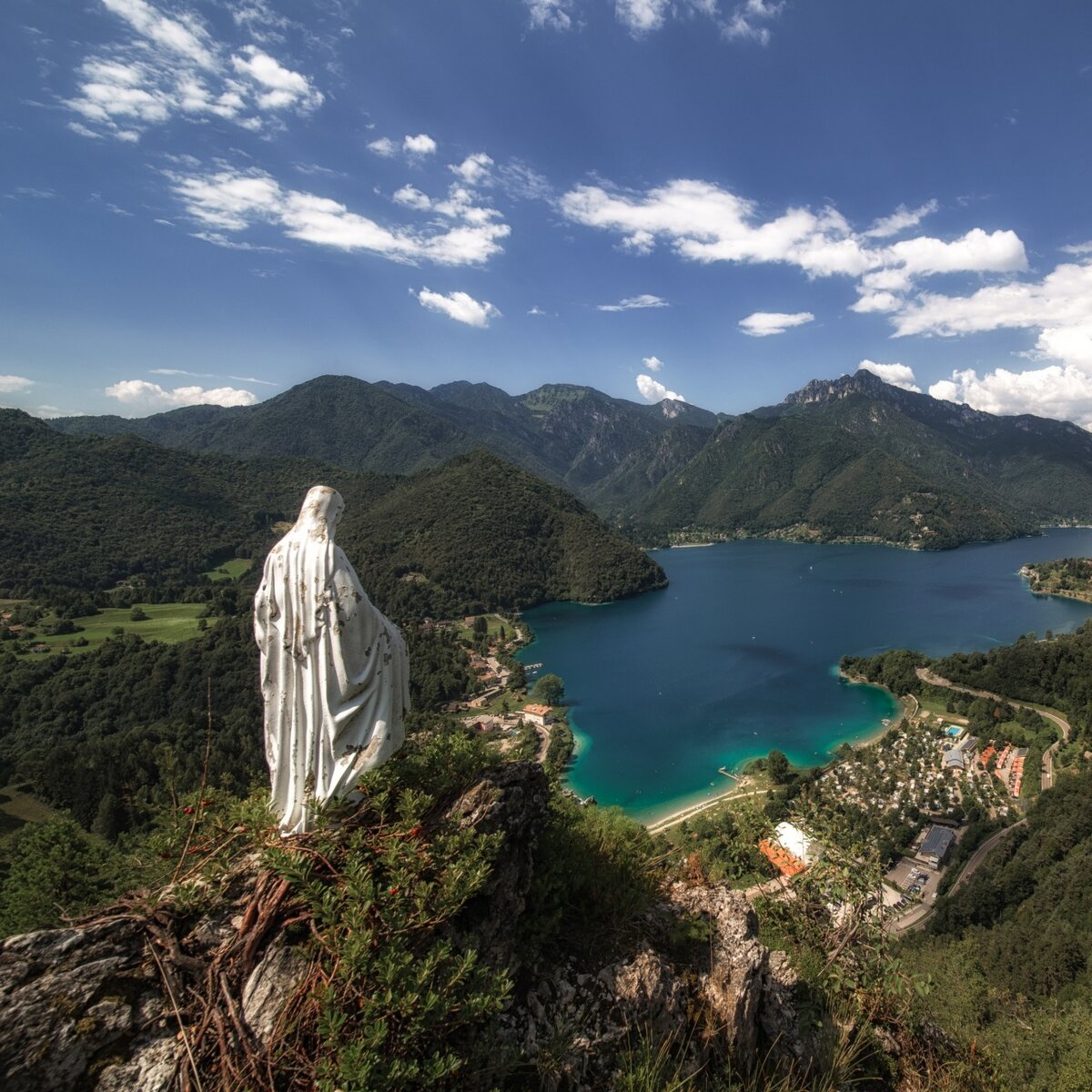
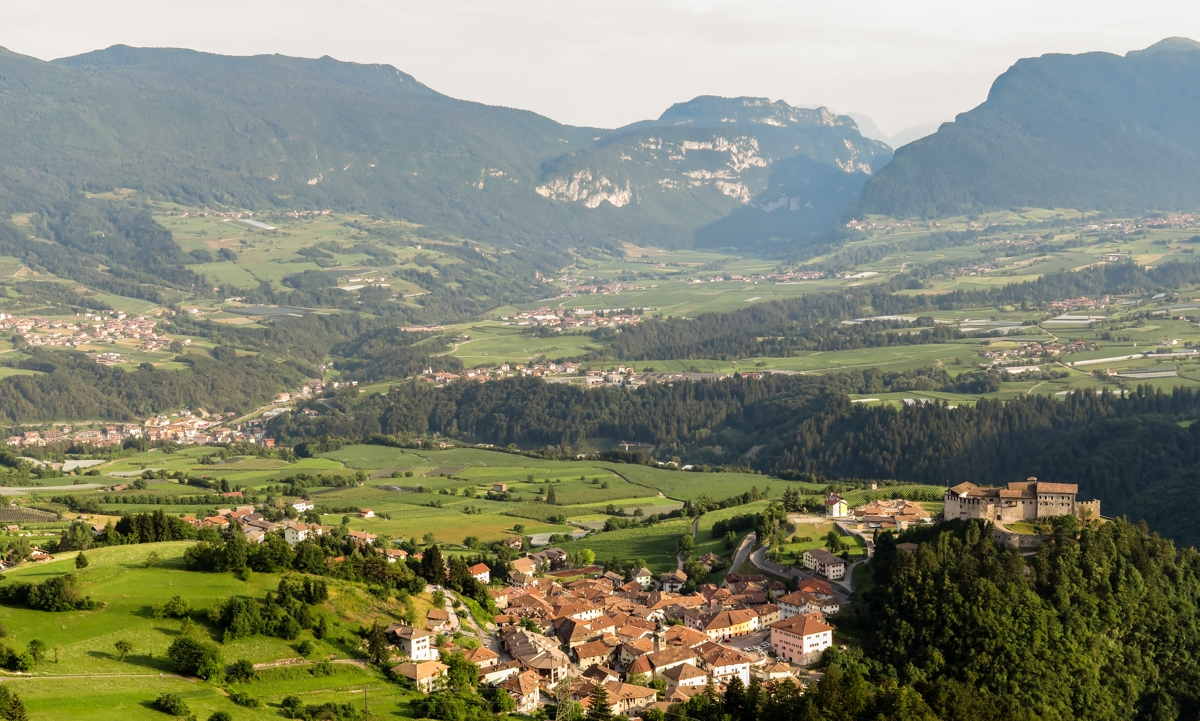
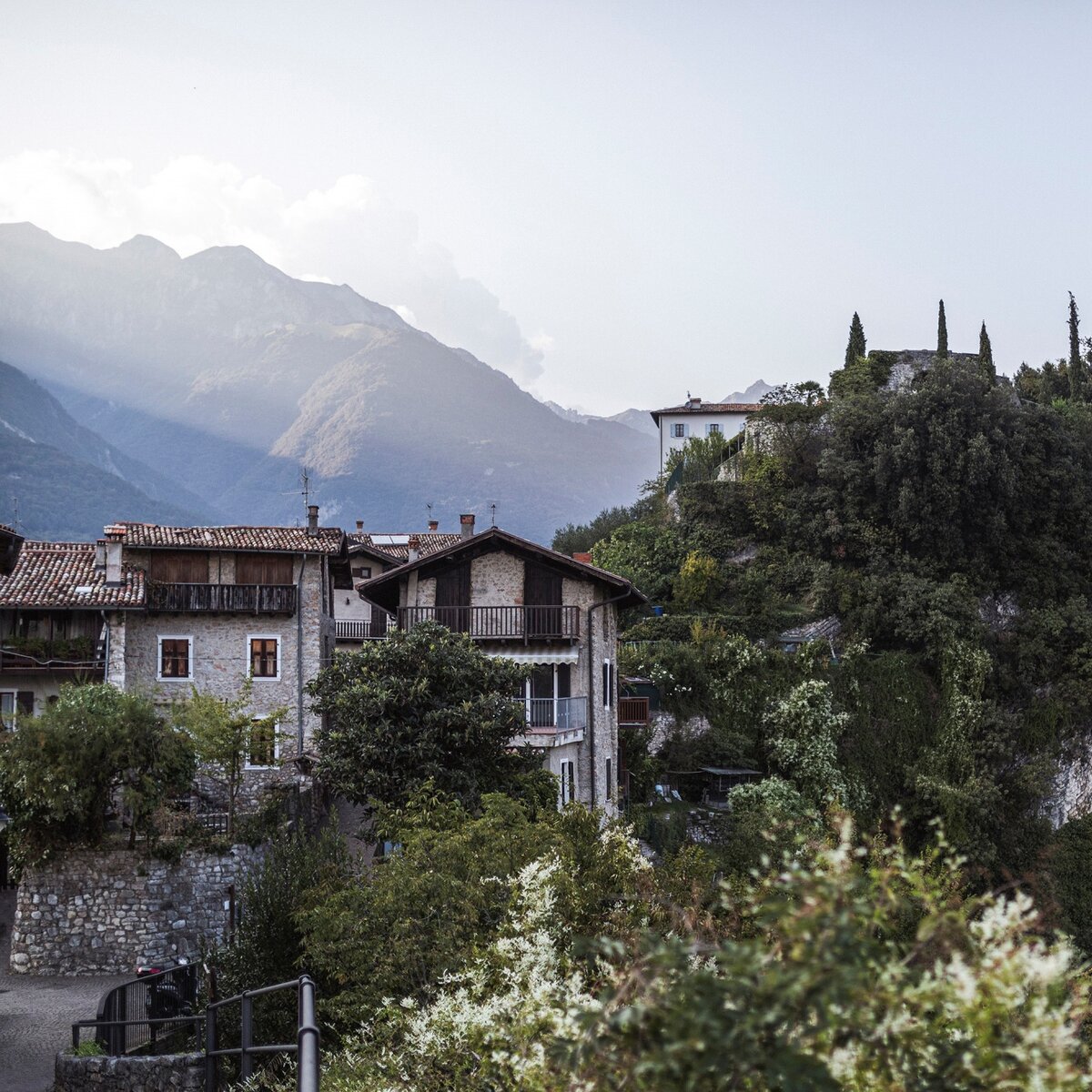
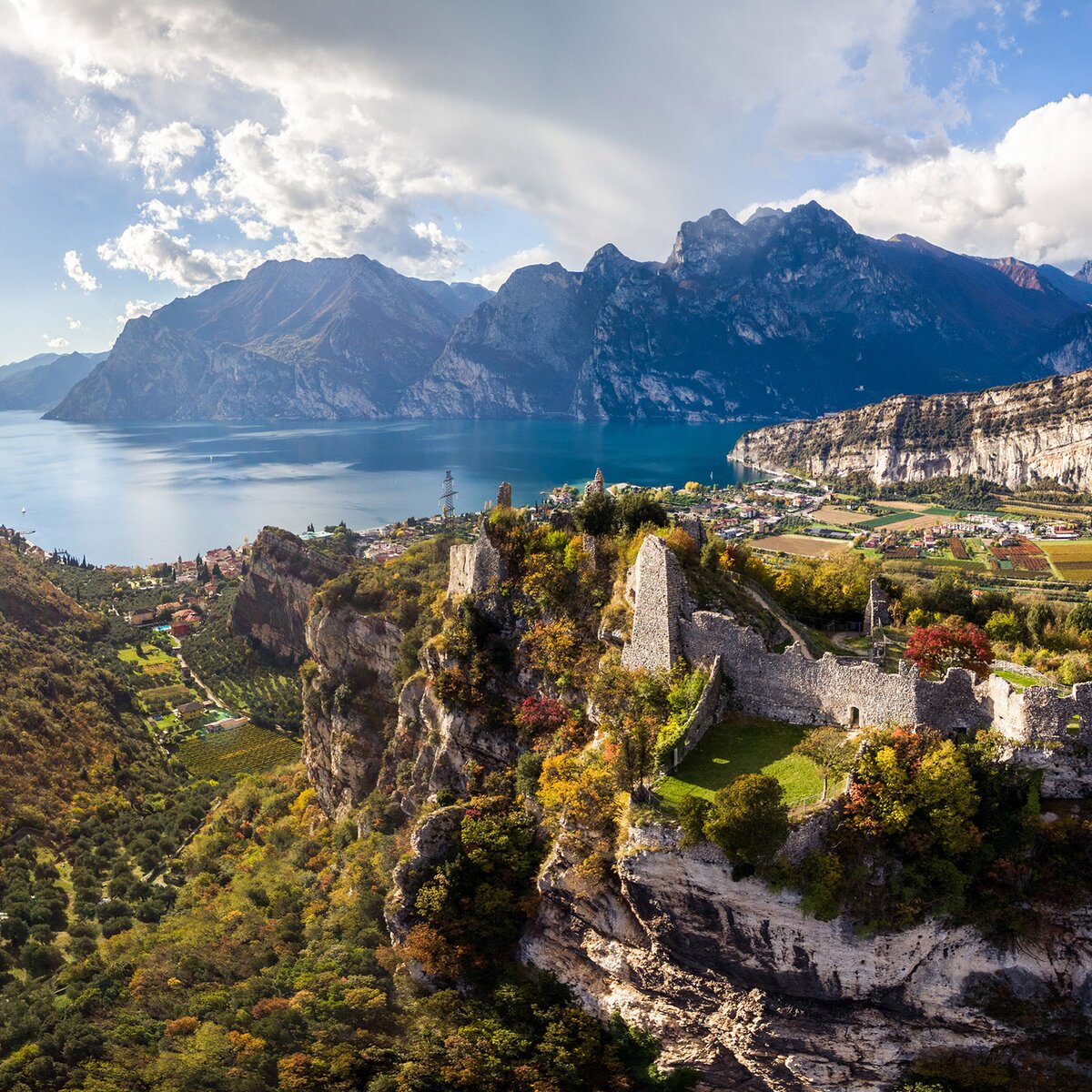
An intense but varied and challenging stage. We regain altitude and reach the summit of Mount Creino, with its generous views and intact remains of trenches and bunkers.
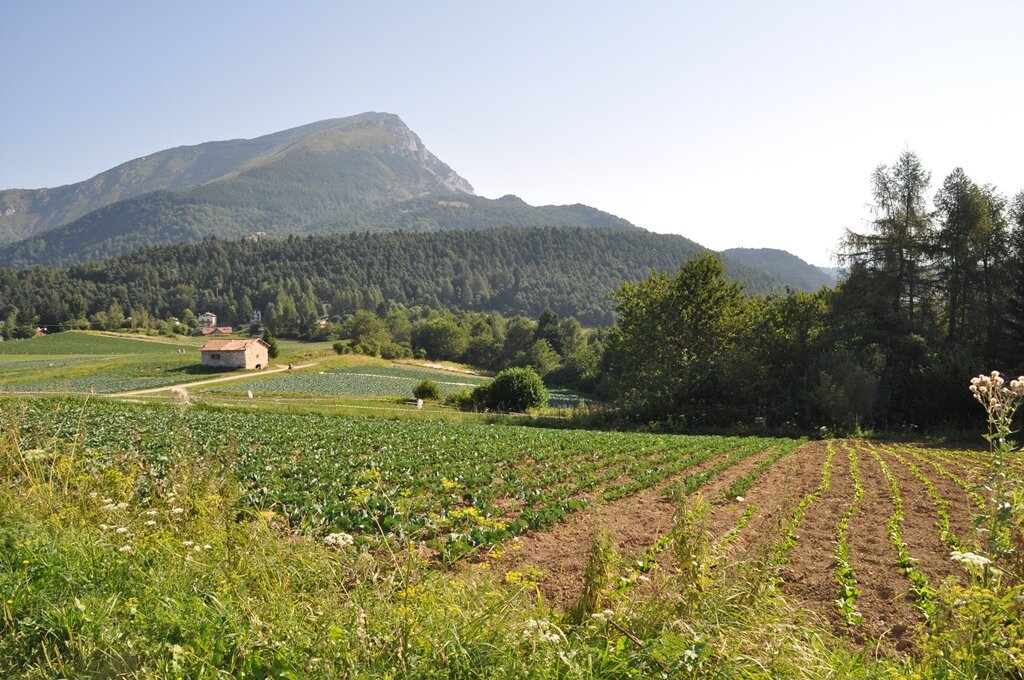
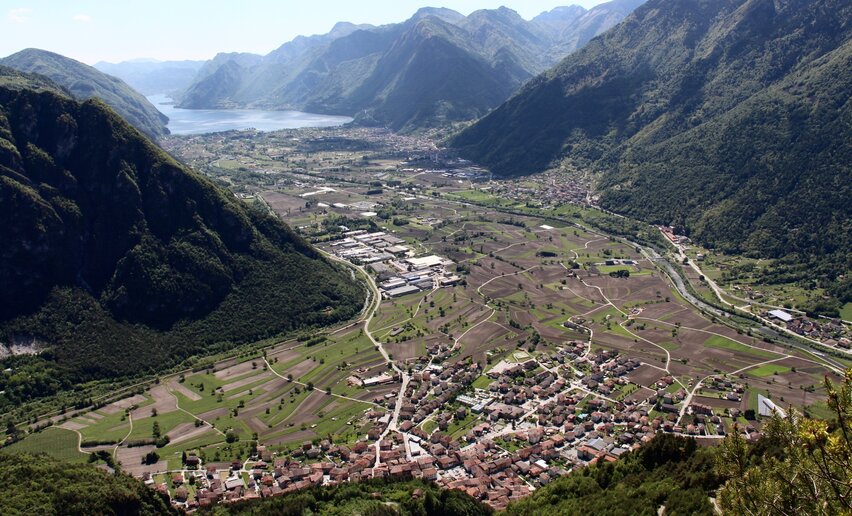
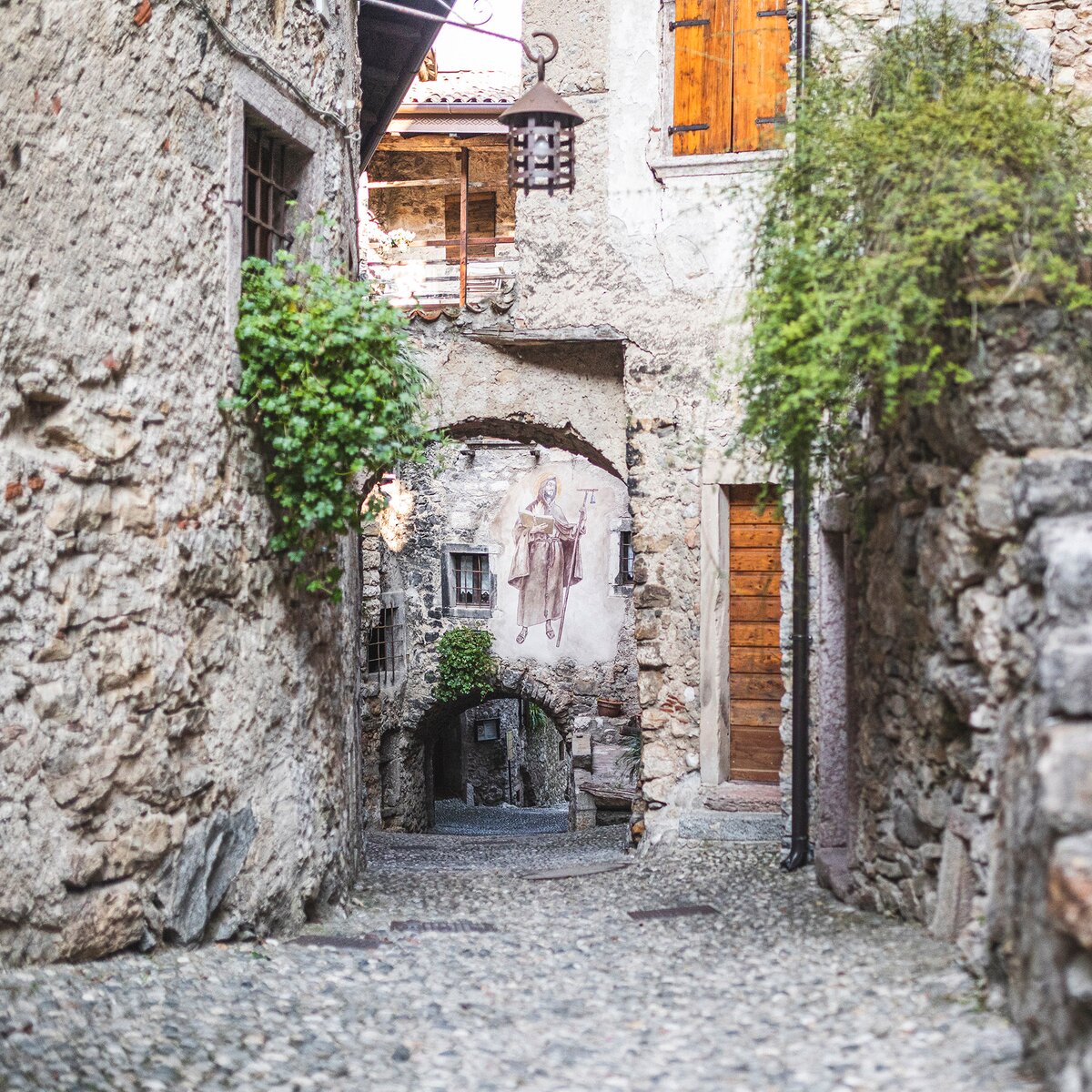
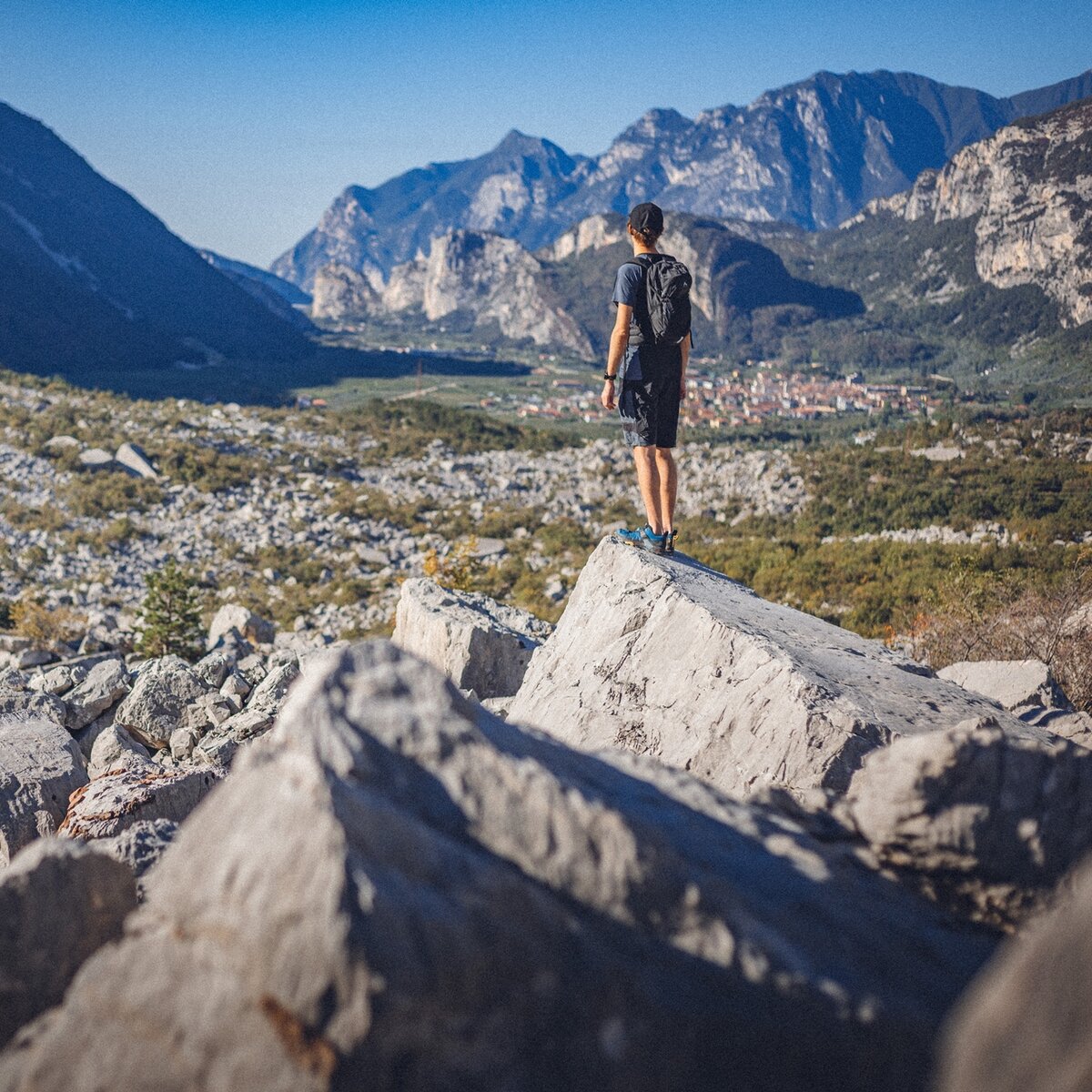
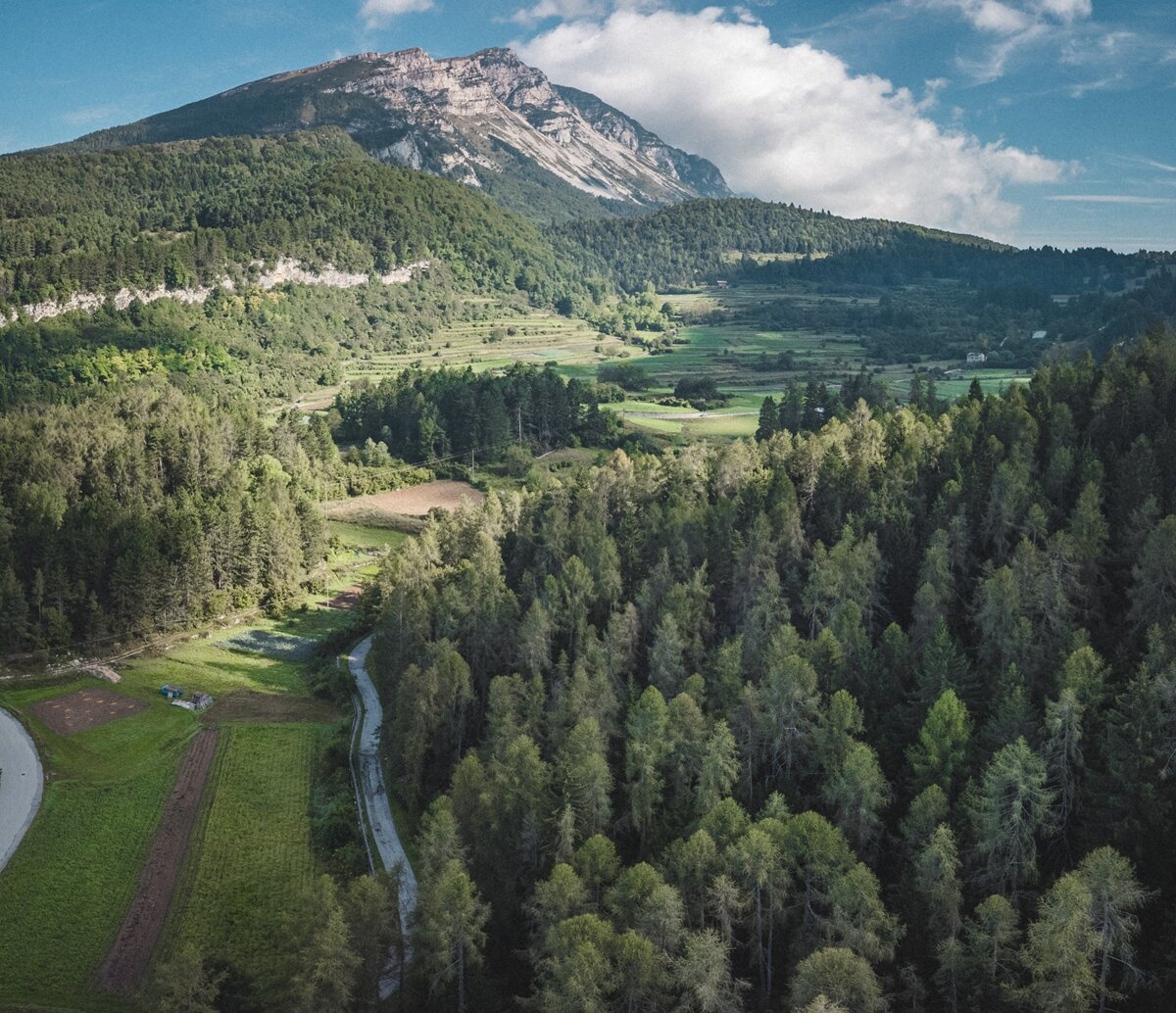
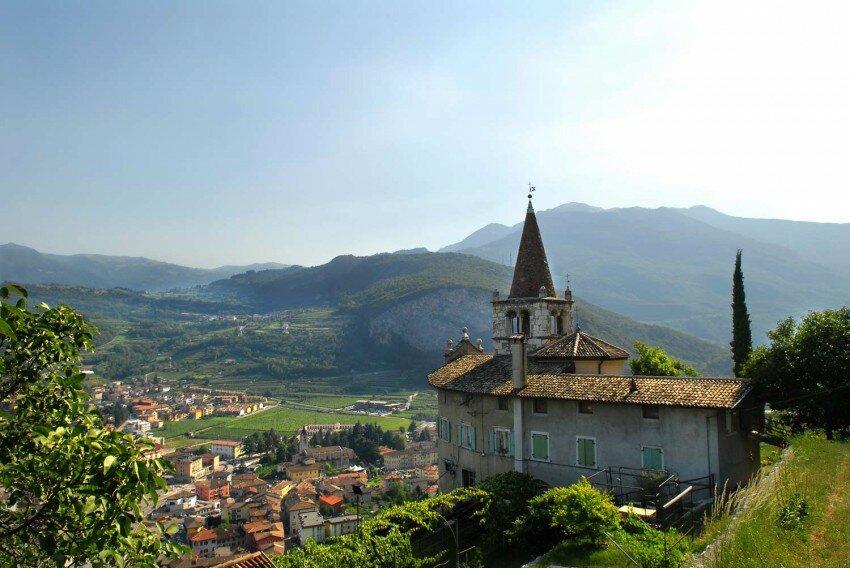
From the historic center of Mori one crosses the part of Mori Vecchio, characterized by old houses with faded colors and medieval walls, arriving at the entrance to the Sentiero delle Laste, particularly smooth and oblique rocky conformations. Going up towards Manzano one flanks the large entrenched complex of Nagia Grom, which deserves a thorough visit if one has time, perhaps accompanied by historical guides who can better recount the strongly experienced positional warfare there. Going up the Val di Gresta between the villages of Valle San Felice and Pannone, one encounters terraces and cultivated fields, flanked by dense mid-mountain forests, in a rather steep section of trail that leads to Mount Brugnolo and Mount Creino at 1280 meters above sea level, the highest point of this stage, before descending into the pleasant and rustic village of Ronzo Chienis.
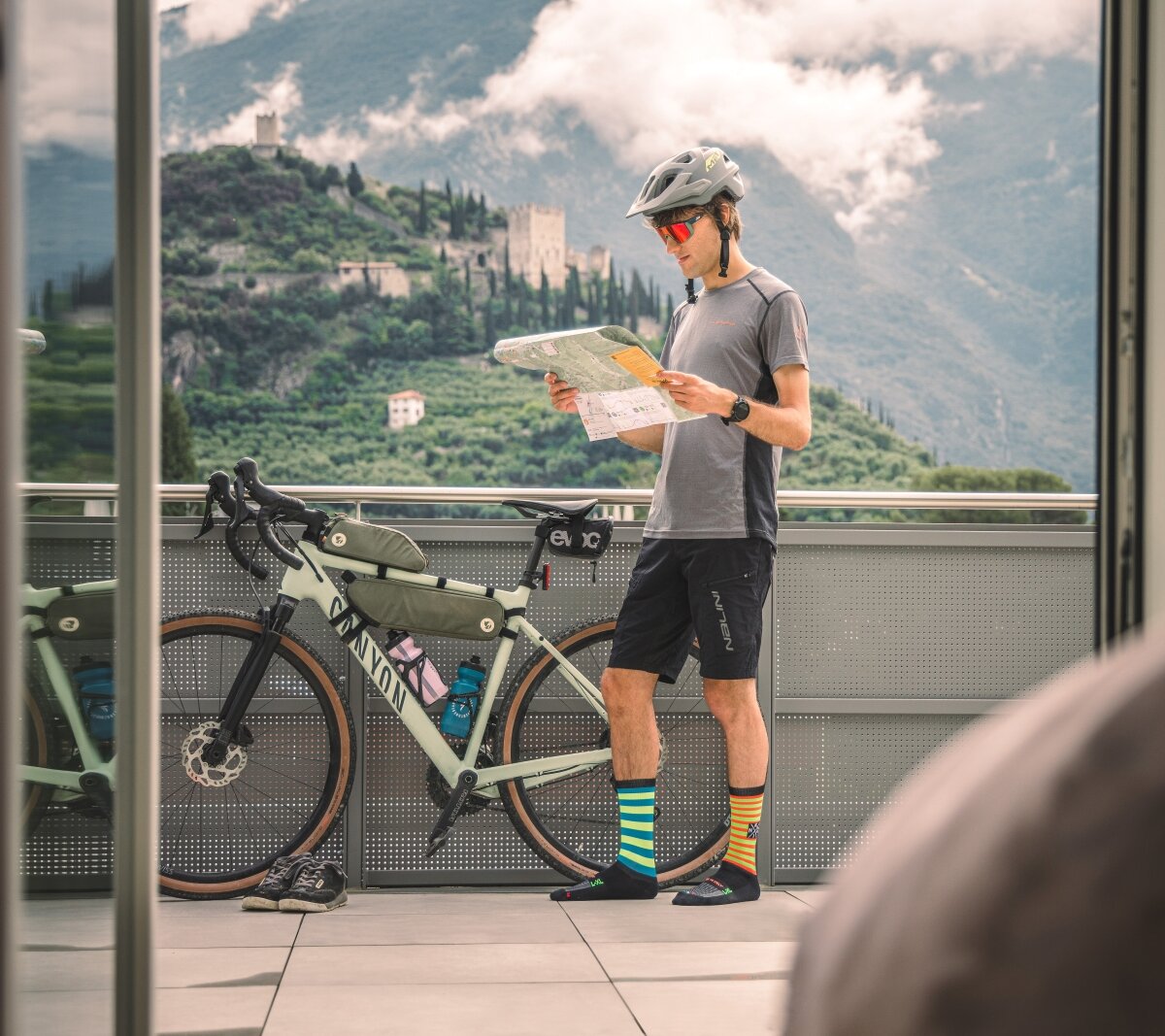
In the mountains, it is essential to know where you are at all times: it is good to have a digital and/or paper topographic map with you, as well as a wrist altimeter and a compass (the digital one found on smartphones is also fine). These are useful tools for orientation, but you need to know how to use them correctly, so you need to practice a bit before you go! Poles are also always useful.

Don't be fooled by the short length of the stage: the climbs are important and, especially in the first one, the heat can make itself felt: good to start early!
In some short stretches (between the hamlets of Manzano and Pannone, and along the crest of Mount Creino) signage is not present and the trail may be partially hidden by vegetation: you need to consult the gpx track to get your bearings.
The Peace Trail is a high route, not a simple walk: therefore, it requires the right preparation and experience. If you are a beginner, rely on a guide!
Before you set out, carefully read our advice on mountain caution
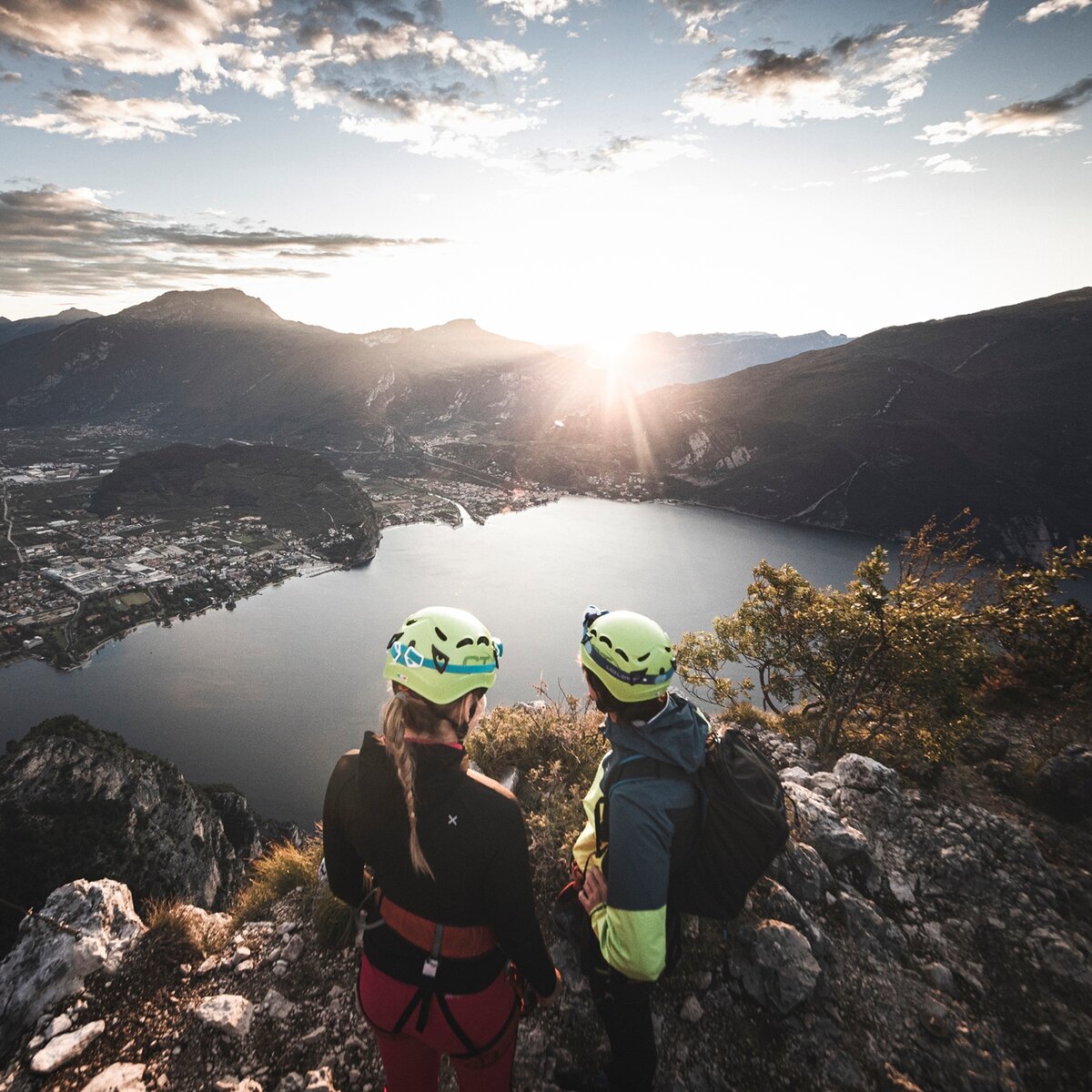
If you love the mountains, you already know how exciting it can be to hike at high altitude, walk a via ferrata, or try your hand at climbing: the important thing is to do it cautiously, with a conscious and careful approach.
To help you keep in mind the correct behavior to adopt, with Dolomiti UNESCO, the Trentino Refuge Managers Association, S.A.T., Alpine Rescue and Trentino Mountain Guides have organized, a decalogue with 4 quick guides, on different topics.
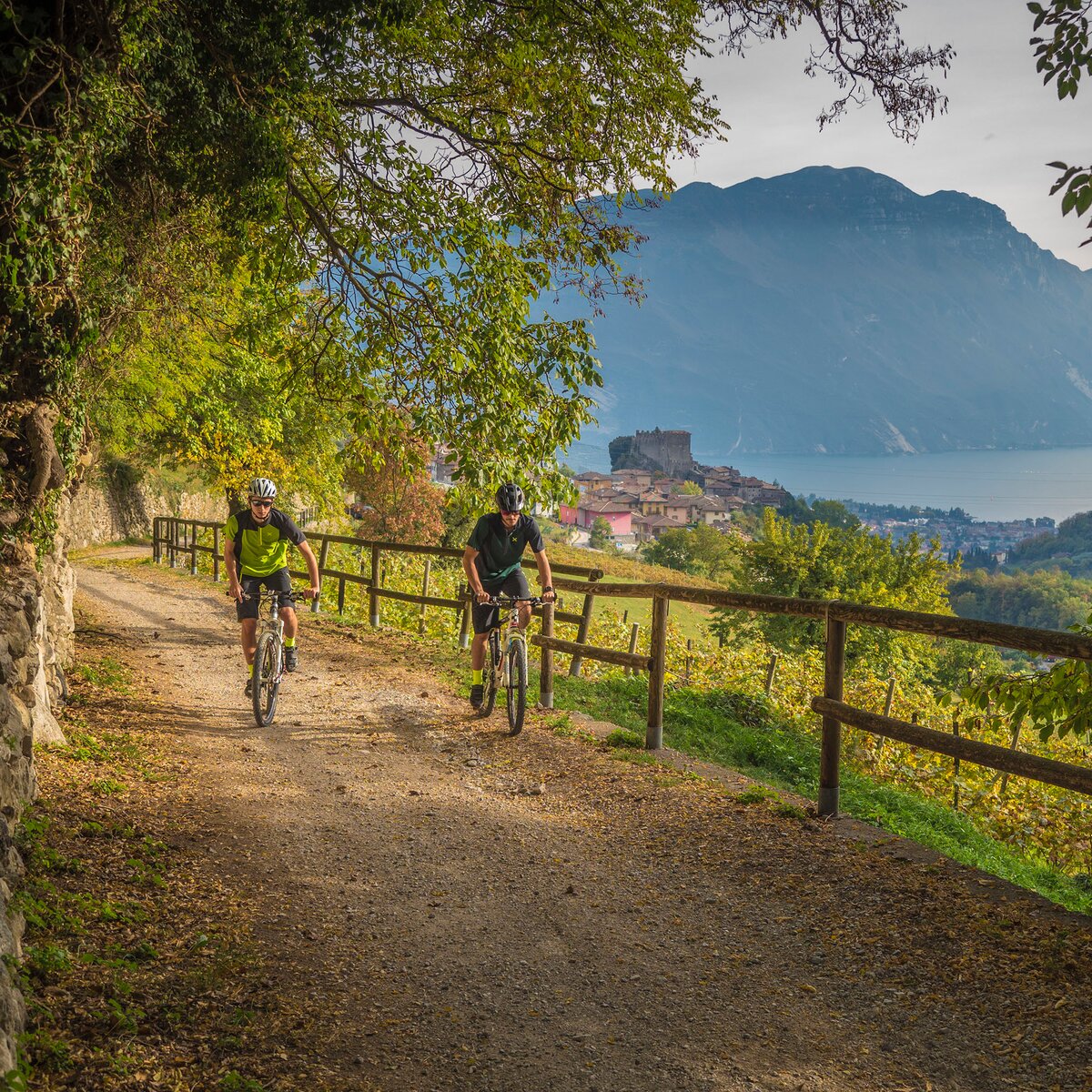
Before we leave you with the 10 rules to follow to experience the mountains with caution, we give you a piece of advice that always applies in the mountains: in every activity always use the appropriate equipment for the altitude and seasonality and follow the advice of those who live and work in the mountains and for the mountains!
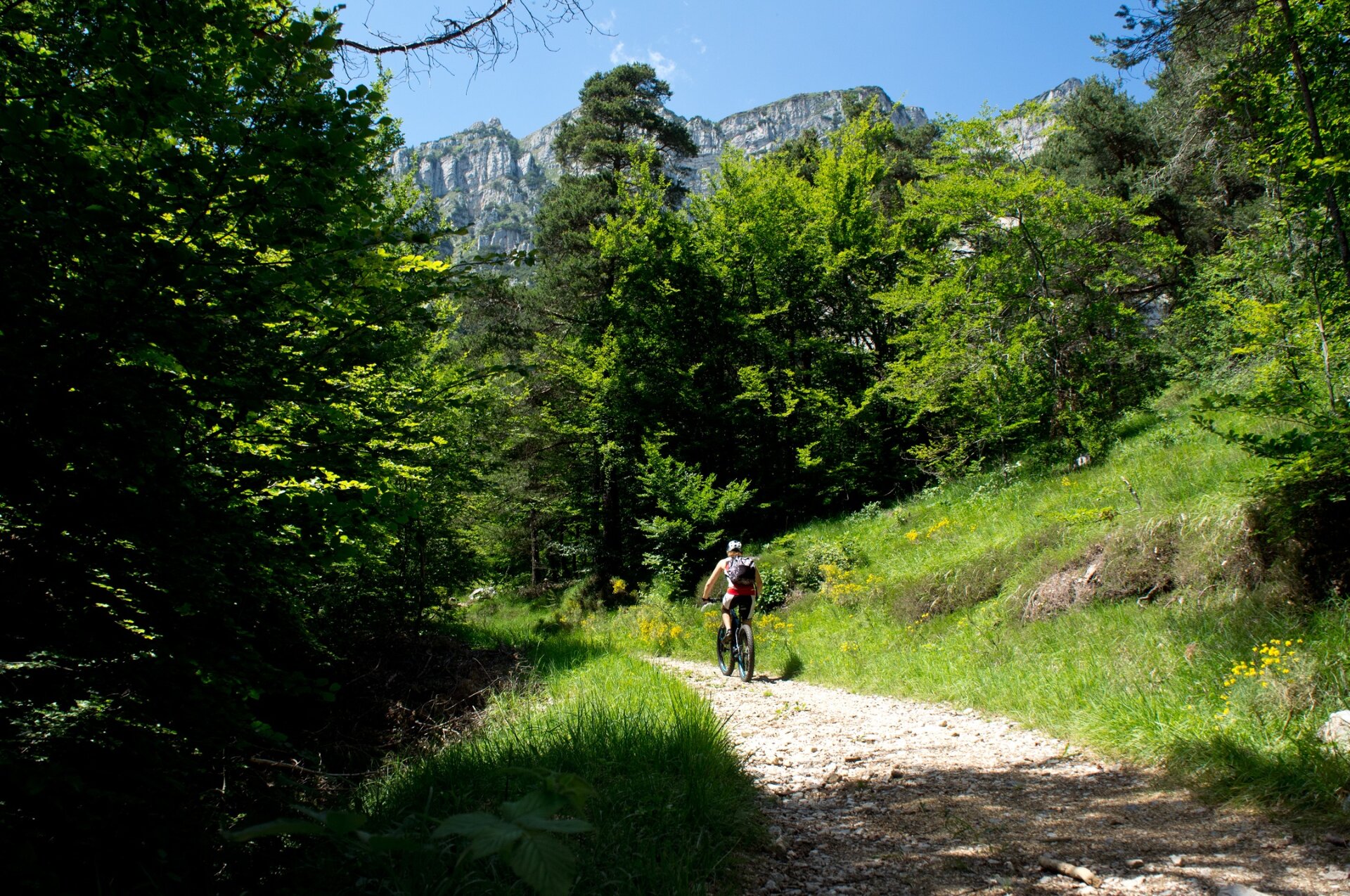
We leave the center of Mori and, walking through its streets, head toward the western end of the village, close to the mountains. We thus take the path and attack the rather steep climb that runs parallel to the equipped trench trail. In spite of the shade of the forest, the heat is felt-we are exposed to the south-and we need to dose our energy; we find some rest areas, at the old bunkers, where we can catch our breath. Very nice is the passage next to a large slab of slanting, bare rock.
Finally, we reach a farm road and arrive in the beautiful hamlet of Manzano, with its neat fields and stone houses. Having passed the village, keeping to the road we gain the pass at the foot of Mount Grom (which houses an entrenched camp, which can be visited by history buffs); we follow the road for another 200 meters; then, we swerve to the right going up an asphalt ramp; monitoring the gpx track, we enter a path that makes us gain altitude, and we come out again on a small asphalt road, which we follow comfortably until the village of Pannone.
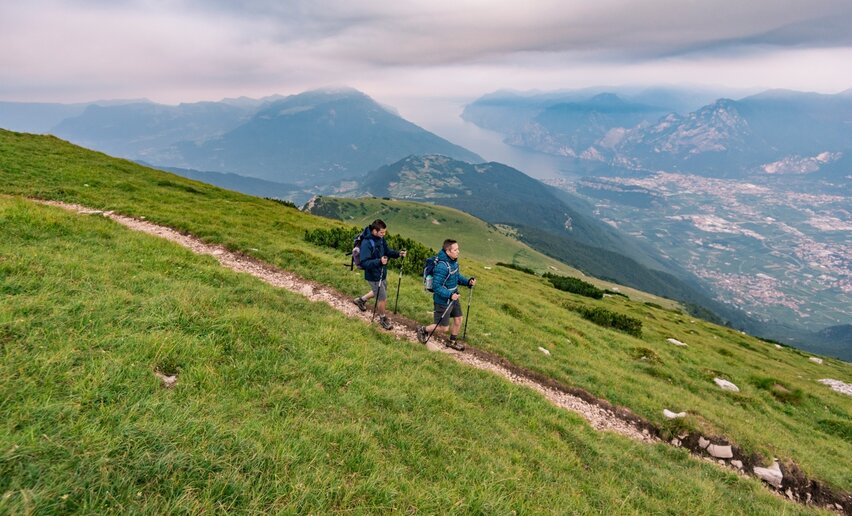
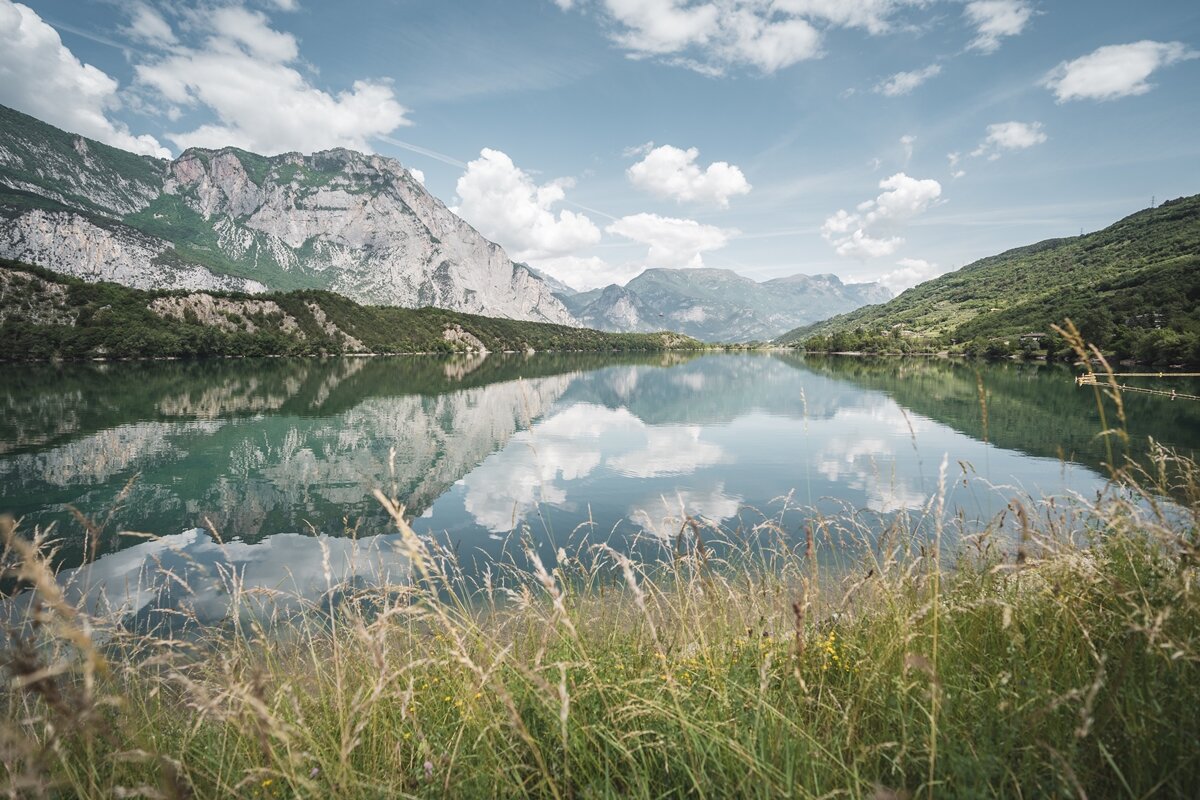
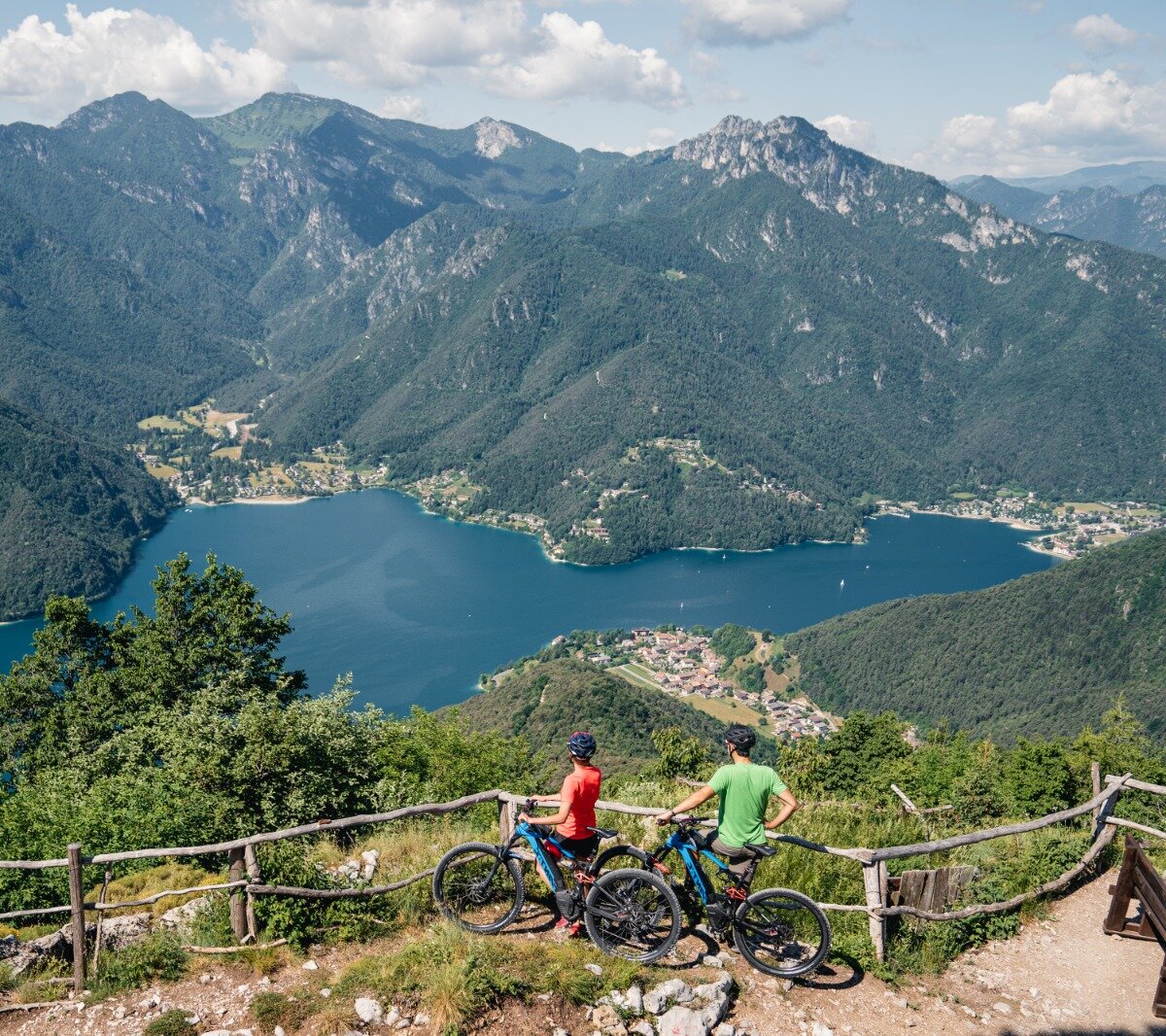
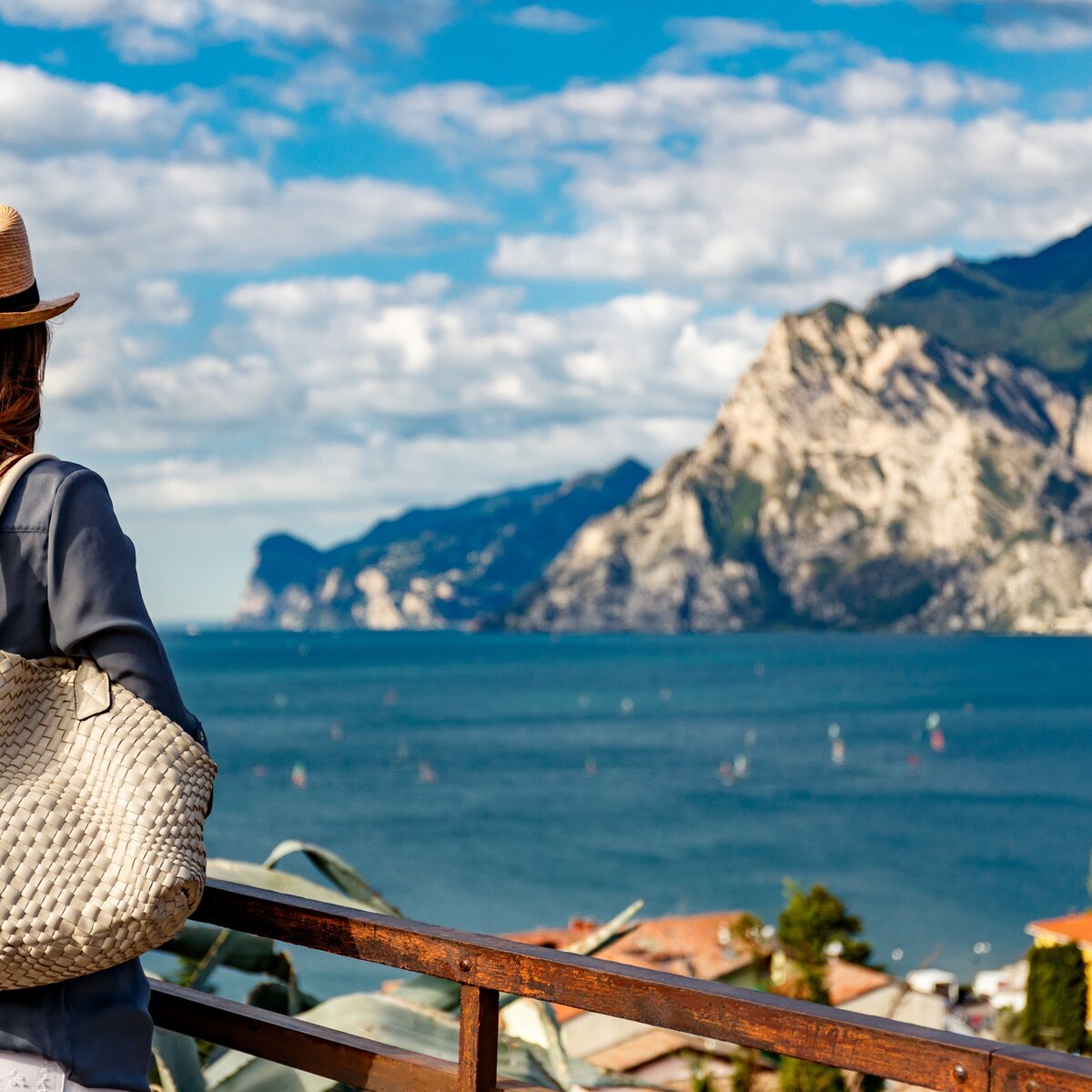
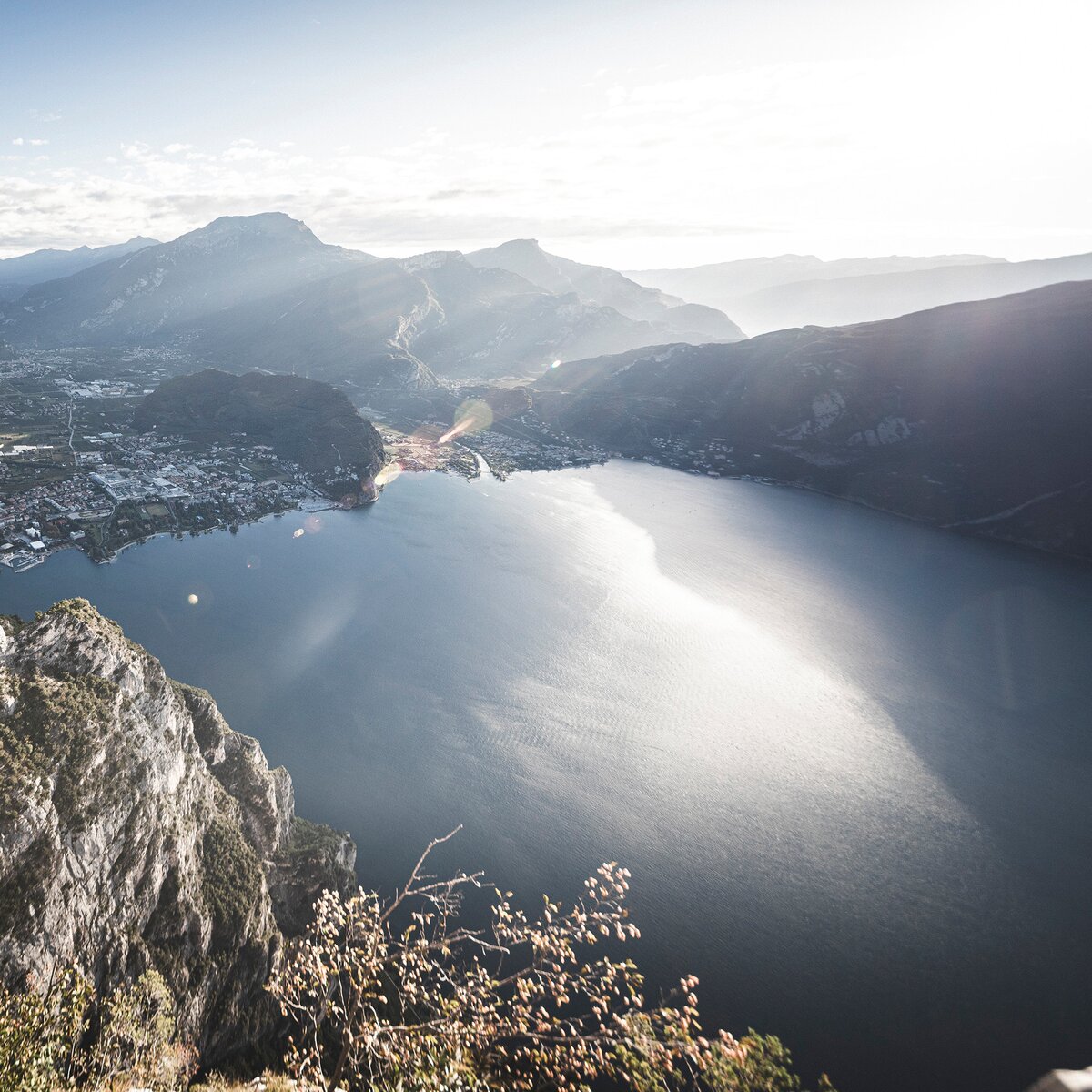
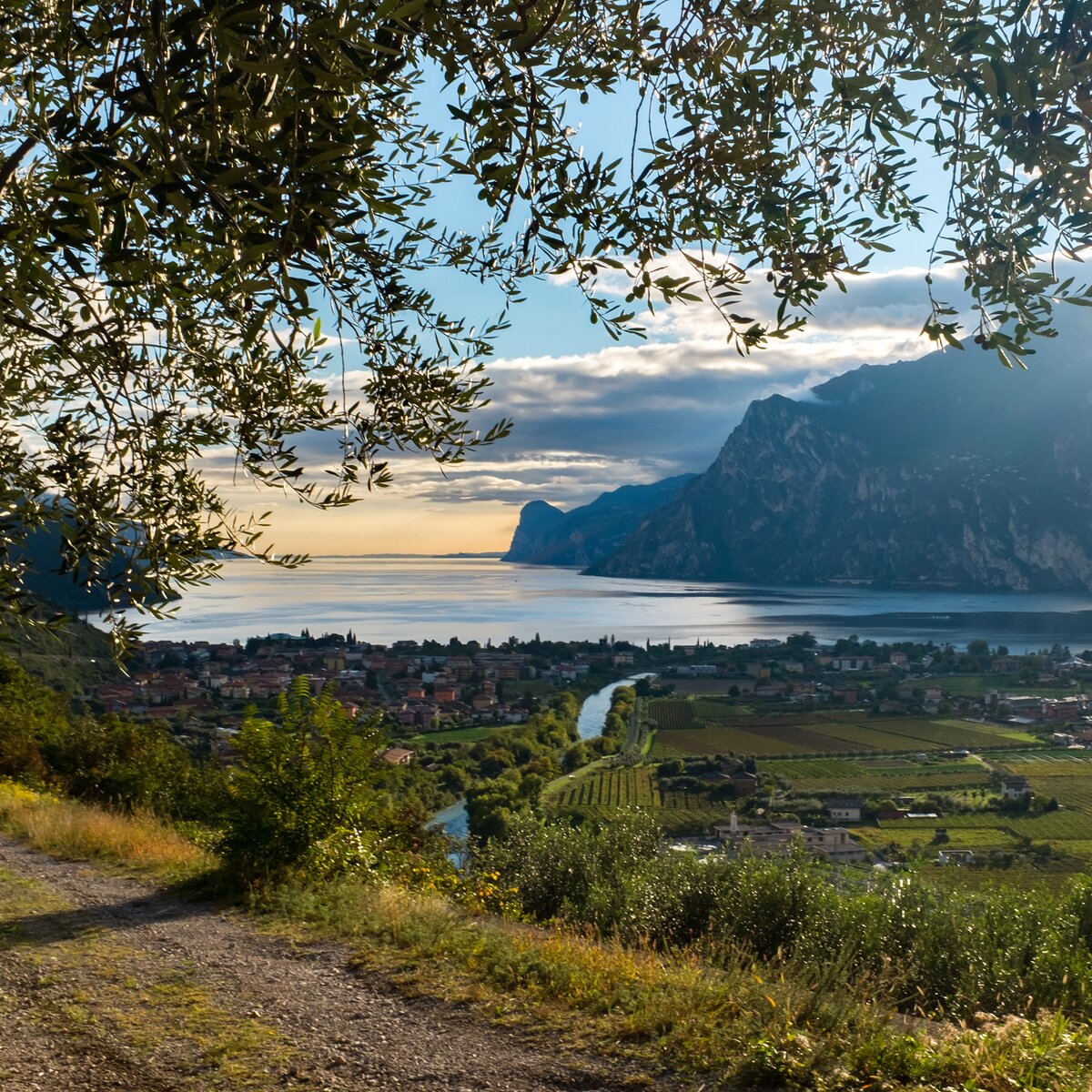
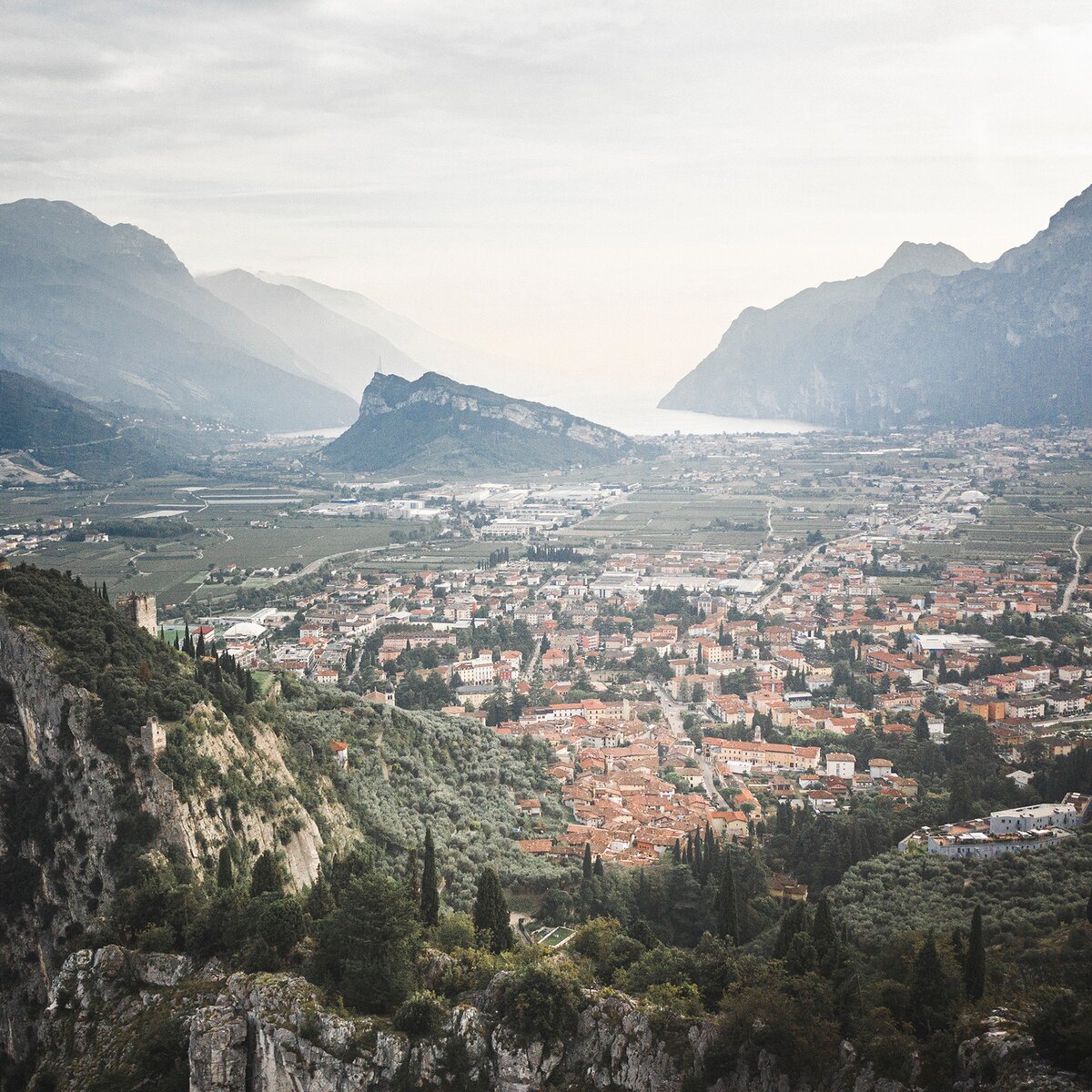
Past the village, we stay on the asphalt road until the first hairpin bend; from there, we continue on a minor road, halfway up the hillside, following the signs for Maso Naranch. We cross a nice grassy plateau, with beautiful views of Lake Garda and some pretty little houses, while to our right we strike the bristling walls of Mount Creino; then, keeping to the right at a fork, we take the dirt road (soon a path), re-enter the woods steadily, and go uphill toward the junction with the western crest of Creino. Reaching the junction, we turn right along trail 637; the climb becomes intense, some sections "pull," and so we quickly gain altitude, fortunately always protected by the shade of the forest.
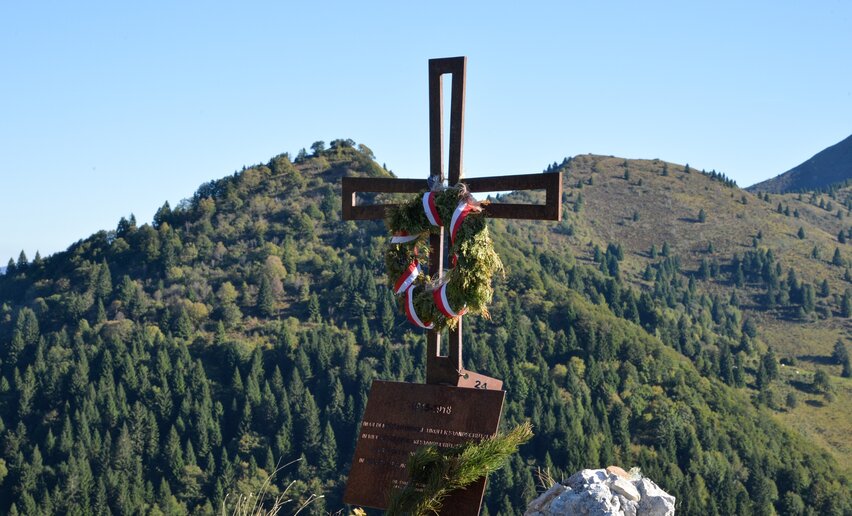
Having gone around the minor peak of Mount Brugnolo from the north, we come to a cultivated field; we keep it to our left and go to thread the little track that runs parallel to it-it is not so easy to spot, because of the tall grass that covers it, but soon the track becomes clear again. We thus face the last positive drop and reach the summit cross: we are on top of Mount Creino (1292 meters). To take a break, however, it is worth continuing a little further, until we reach the attack of the descents and, with them, the first trenches: going down some steps (a flashlight is needed) we enter a large bunker, at the end of which there are some panoramic slits, ideal for catching one's breath or having a bite to eat in the cool air.
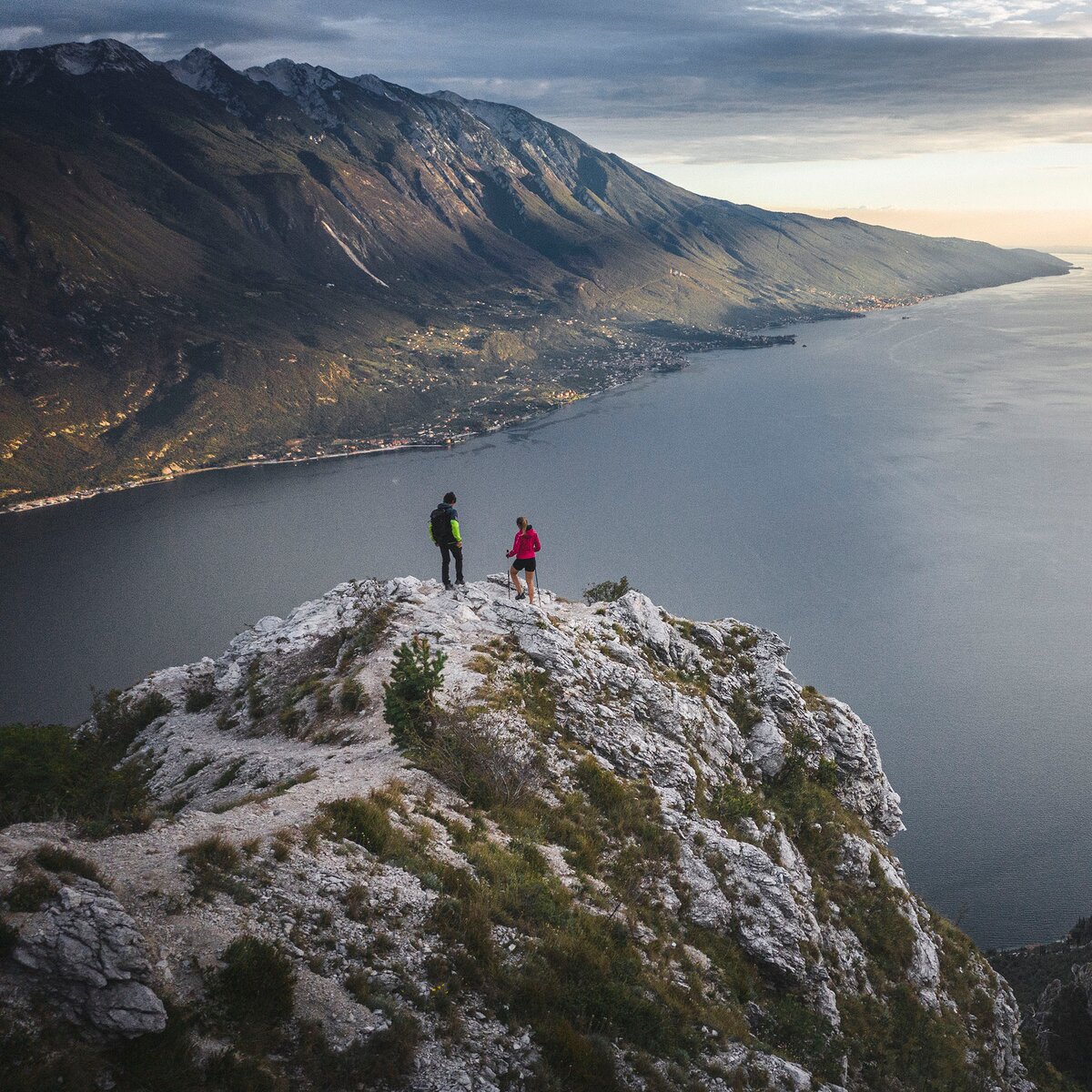
The descent, on a very easy trail, runs along the trenches; many bunkers can be visited. With a traverse through the woods we reach the asphalt road and see the village of Ronzo Chienis, our destination; we thread a small farm road down through the fields and, in a few minutes, we are there.
Always prefer onion clothing, with layers from light to gradually heavier. Carry a spare and rain and windproof clothing, gloves and a cap in your backpack even if the sun is shining. Don't forget sunglasses and high-protection sunscreen, appropriate footwear for the activity, a rescue kit, a power bank for charging your phone in case of emergency, and water and food related to the activity.
If you are sleeping in the shelter, bring a sheet or light sleeping bag, thermos and a pair of light slippers (if they are not already provided at the shelter), and a headlamp.
Before you leave, carefully read our advice on mountain caution