A natural and archaeological treasure
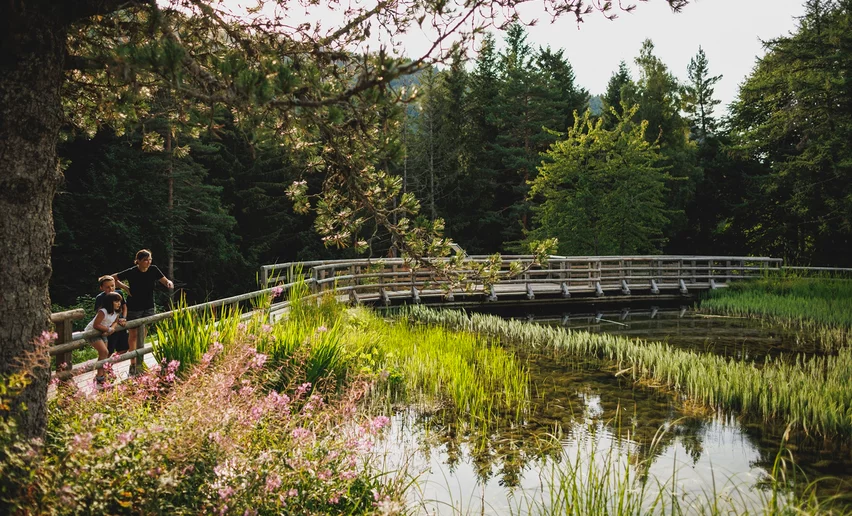
The Fiavé Peat Bog is one of the largest in Trentino, formed over the remains of the ancient Lake Carera, which once covered this area around 15,000 years ago. Over time, the lake filled with plant material and gradually transformed—first into a marsh, then into a peat bog.
What is a peat bog?
The name comes from “peat”, a waterlogged layer of plant remains that, due to acidic and oxygen-poor conditions, cannot fully decompose. Peat bogs are rare ecosystems that preserve important scientific and environmental treasures.
A pristine natural gem
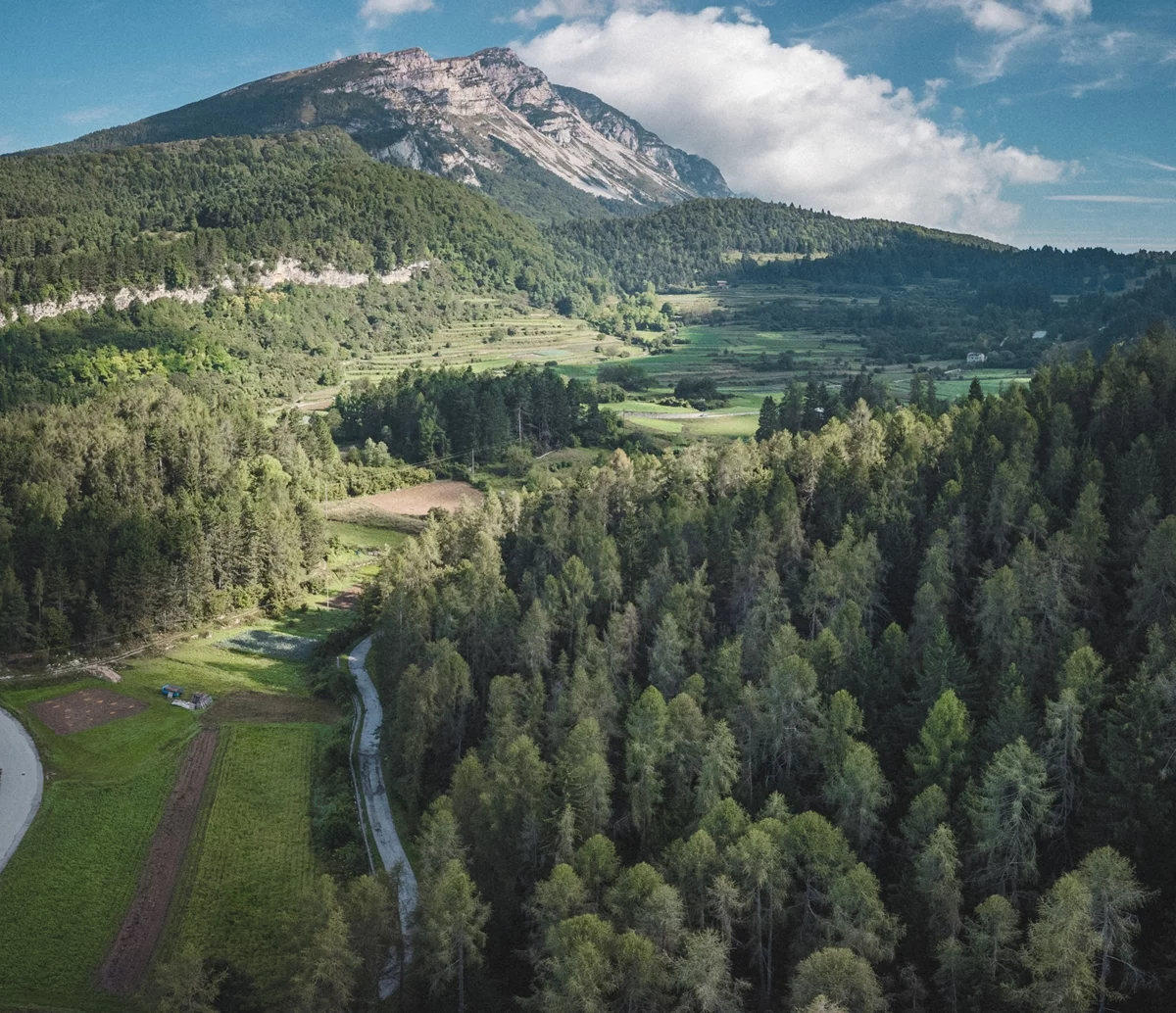
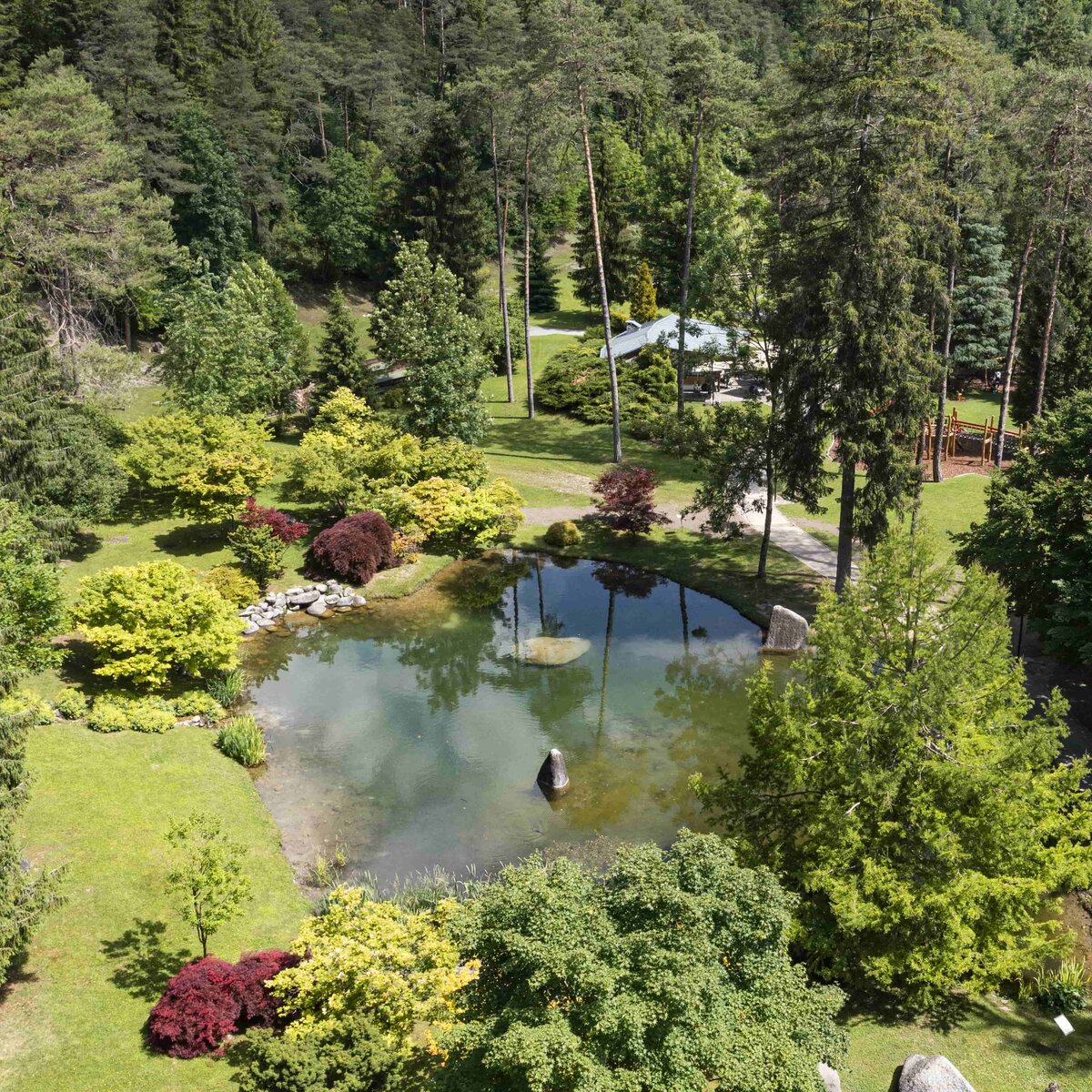
Shaped by ever-changing soil conditions, the Fiavé Peat Bog is home to a rich variety of plant communities—some of them extremely rare. The protected area covers about 140 hectares and has been designated both as a Biotope and a Provincial Nature Reserve. It hosts over 160 plant species and around 100 vertebrate species.
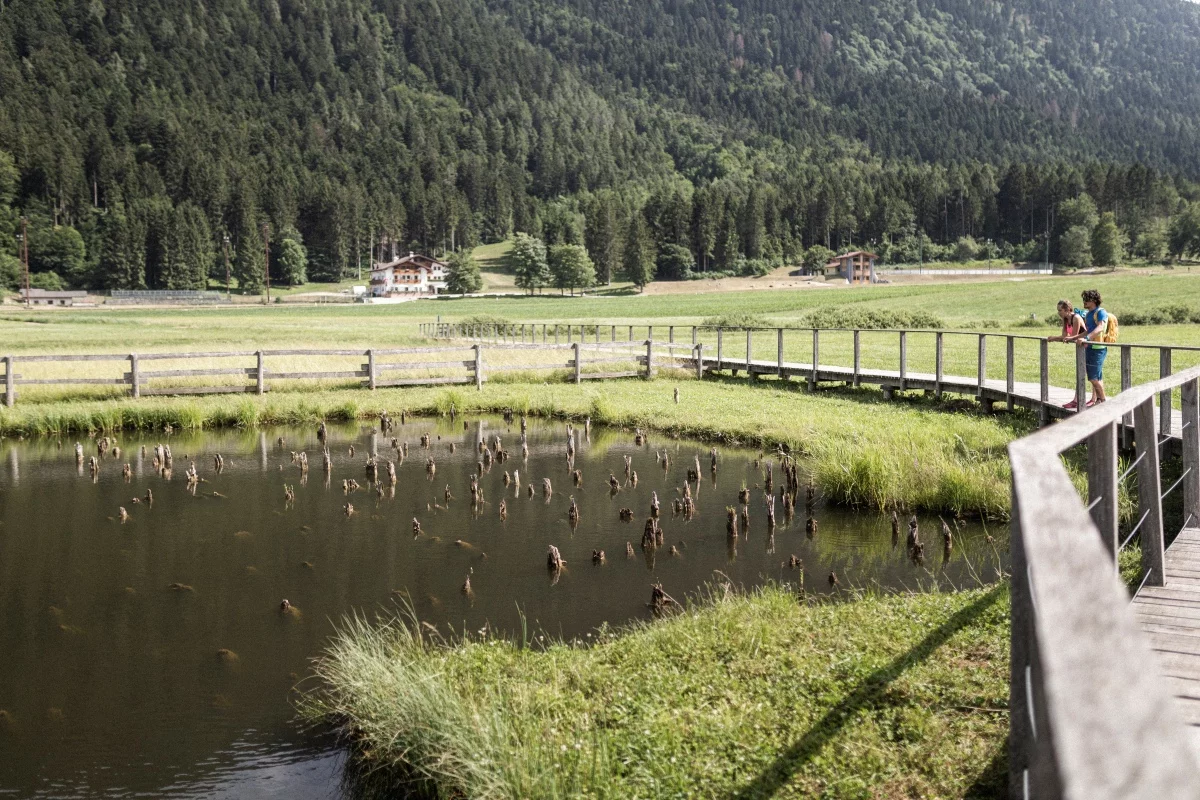
The landscape shifts from reed beds and sedge swamps to low peat bog vegetation, wet meadows, and marshy woods of grey willow and alder buckthorn. You’ll even find water lilies blooming in most of the open water areas.
This is also a crucial stopover point for numerous migratory birds, especially in late summer and autumn. For its ecological importance, Fiavé has been recognised by the European Union as a Special Area of Conservation.
A site of international archaeological importance
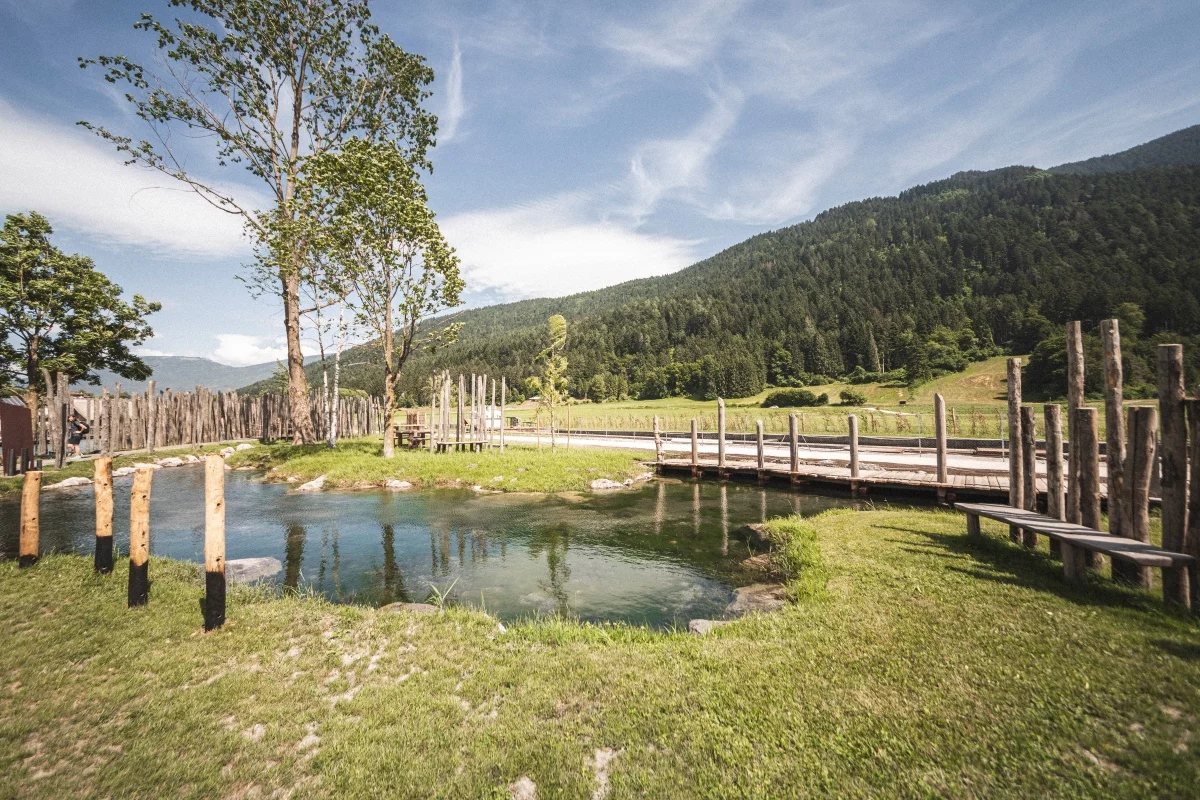
Fiavé is not only a natural wonder—it’s also an extraordinary archaeological site. The area’s fame is largely due to the discovery of a prehistoric pile-dwelling settlement dating back to the Bronze Age.
Thanks to the oxygen-poor composition of the peat, wooden structures and everyday objects from the time have been exceptionally well preserved. These unique artefacts are now on display at the Fiavé Pile-Dwelling Museum.
Visiting the peat bog
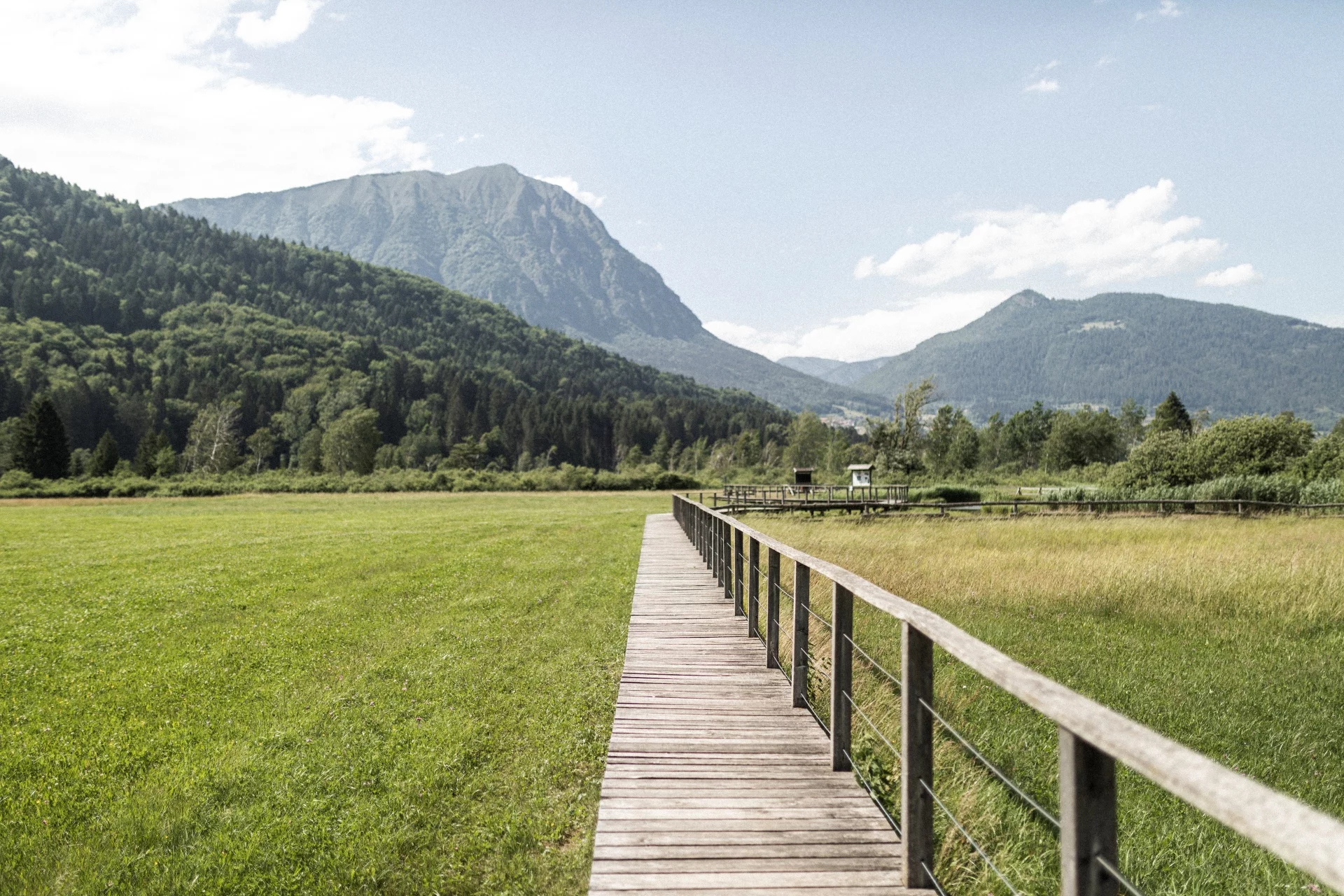
Visitors can explore both the nature reserve and the archaeological area via a well-maintained educational trail that runs along the edge of the bog. It offers a close-up view of a truly unique environment—rich in biodiversity, history, and hidden wonders.
 Offers