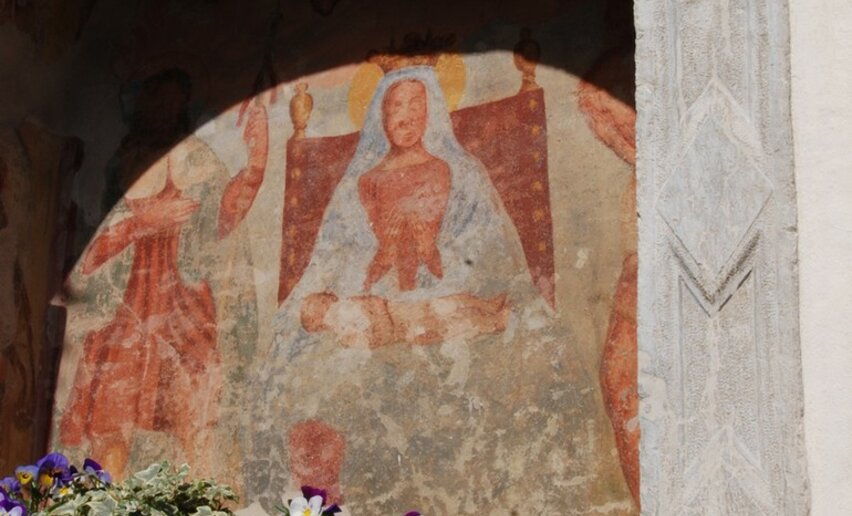
The dedication to Saint Vigilius, the first bishop of Trento and patron saint of the region, points to very early origins.
The church likely dates back to the 5th century, making it one of the oldest religious buildings in the area.
The first written records appear later: in 1194 the church is mentioned in documents, and in 1203 it is described as a Collegiate church, highlighting its importance within the local community, similar to that of Arco.
Over time, the building underwent several changes.
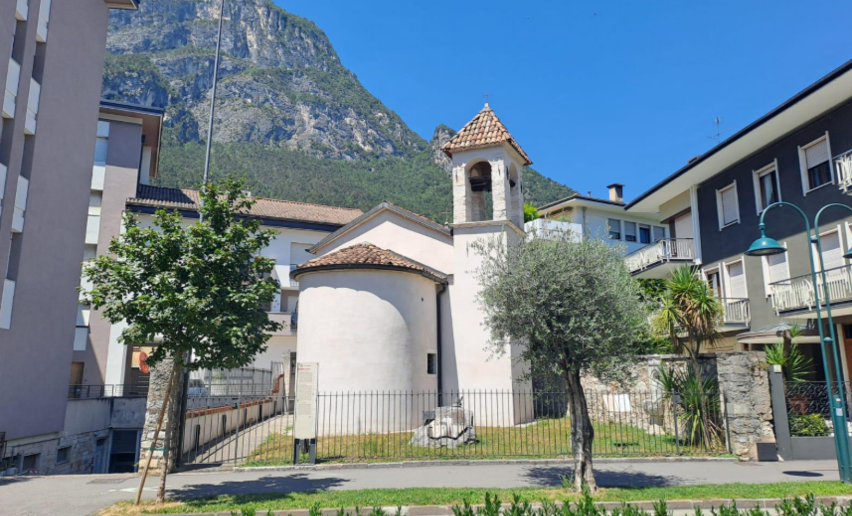
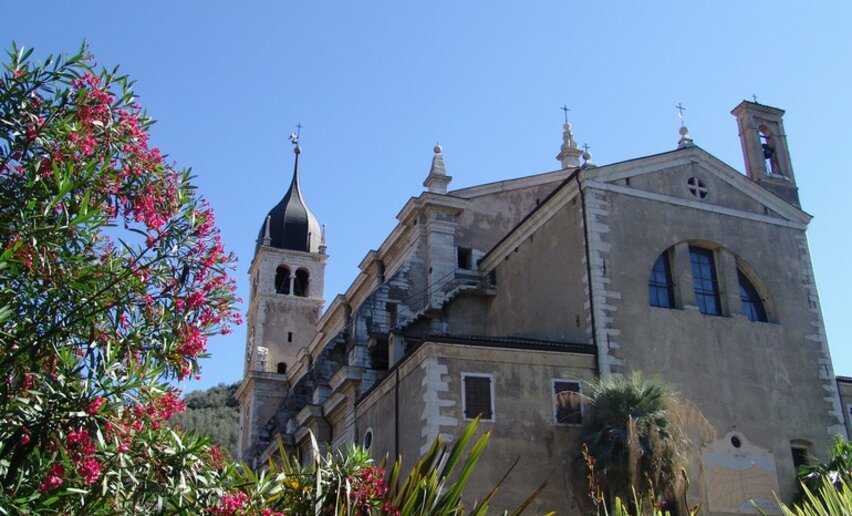
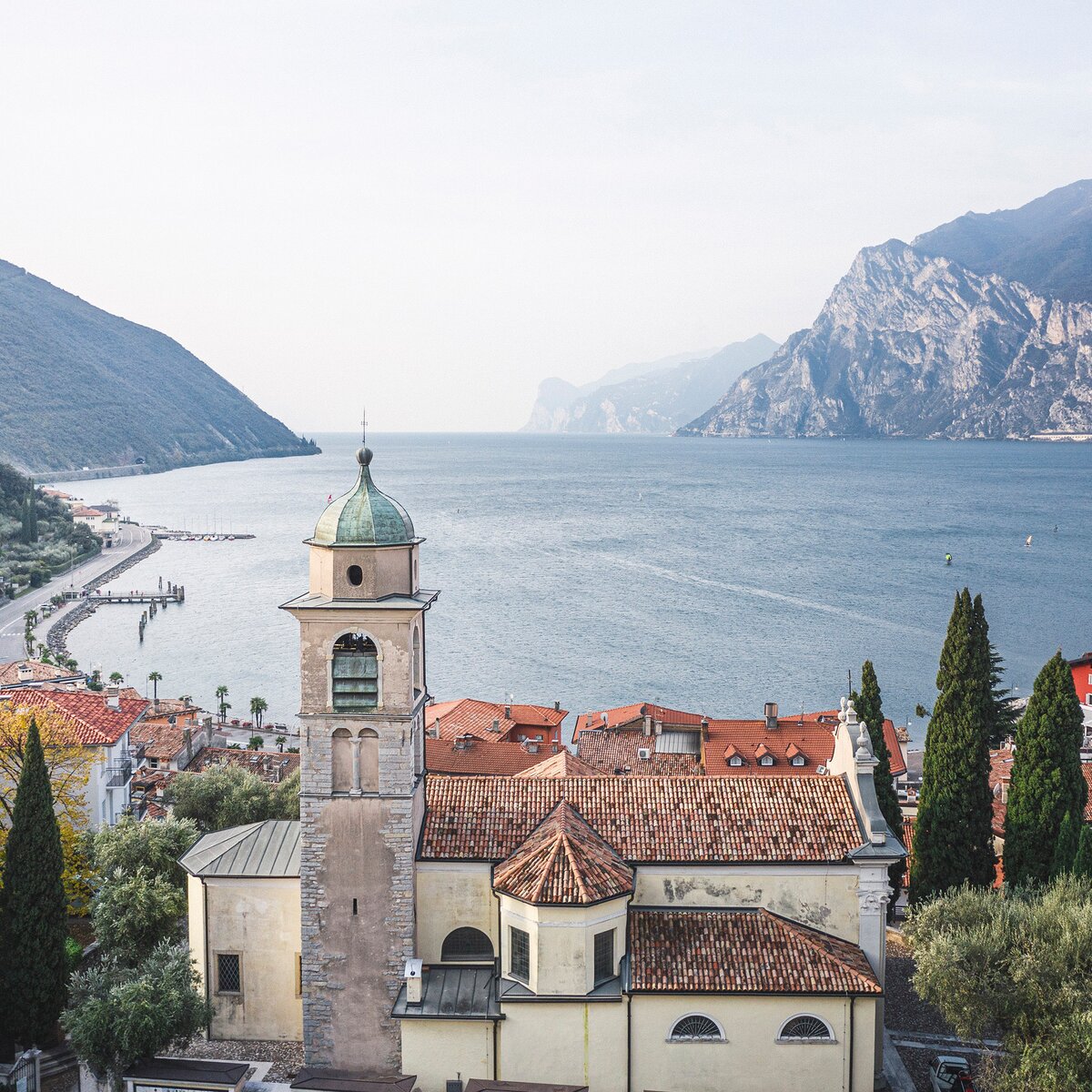
Romanesque elements are still visible in the bell tower, one of the oldest surviving parts.
Between the 16th century and later periods, the church was enlarged and its orientation was modified.
From this phase remains the entrance portal bearing the coat of arms of the Madruzzo family, along with a distinctive detail: a wooden statue of Saint Vigilius with a beard in the pediment, an unusual depiction in the Trentino area.
The First World War caused significant damage. Post-war restoration works also introduced new interior decorations, including the twelve medallions of the Apostles painted by C. Giustiniani in 1920–21.
Further expansions in the post-Second World War period gave the church its current appearance, with the addition of side chapels, the extension of the apse and the construction of a dome above the presbytery.
 Offers